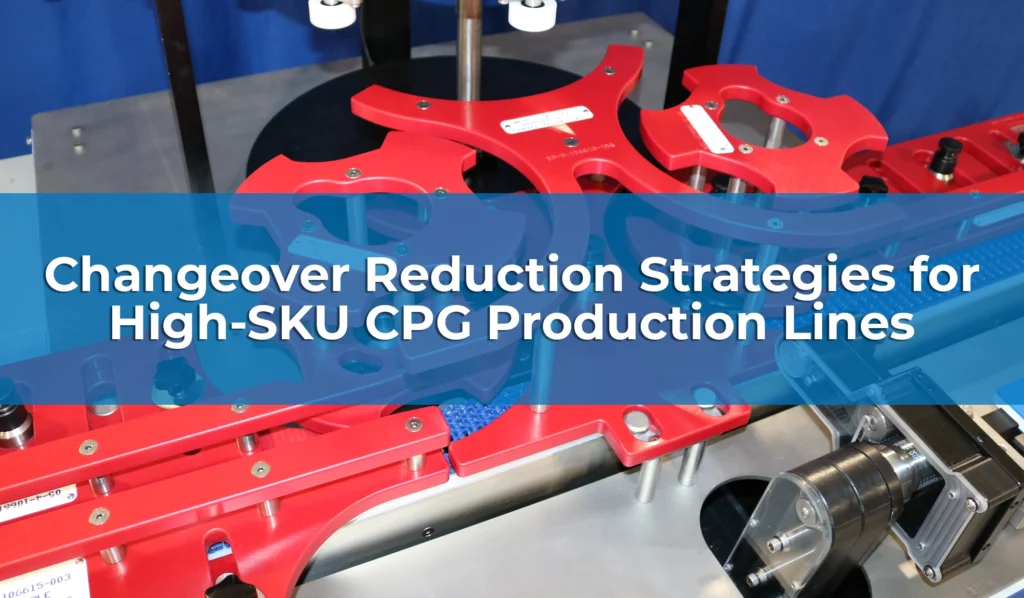
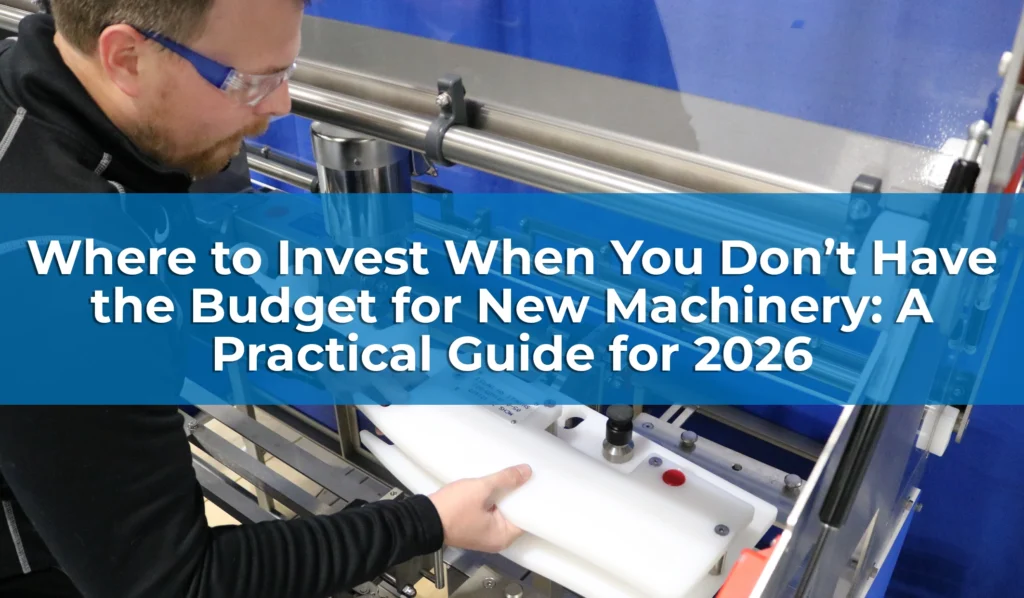
Manual rail adjustments are a routine part of packaging line changeovers—but “routine” doesn’t always mean safe.
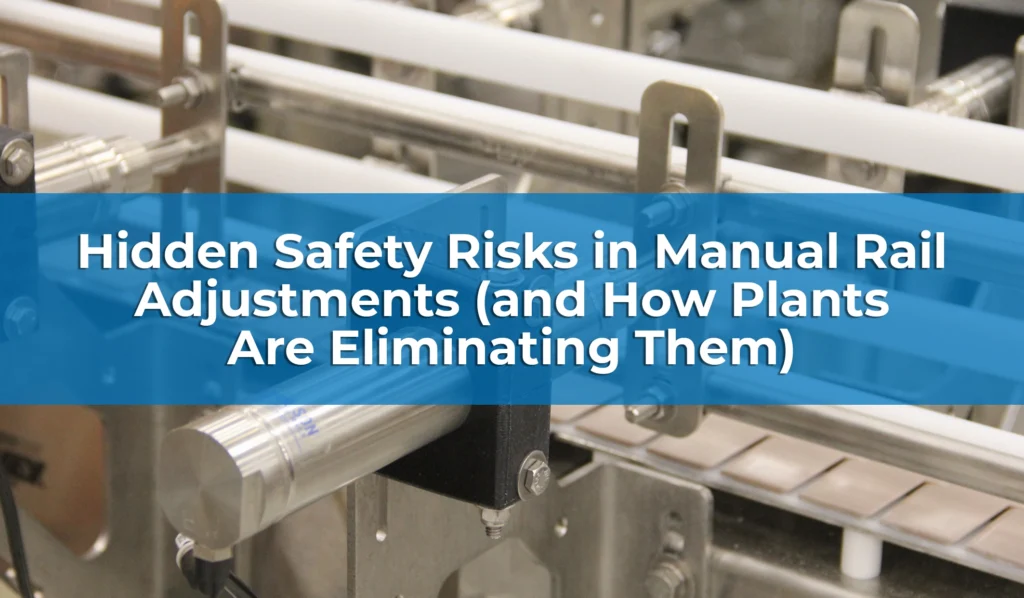
Repositioning conveyor guide rails often exposes operators to pinch points, awkward reaches, and unstable working positions. As safety standards evolve and production demands increase, many manufacturers are rethinking whether manual adjustments still make sense.
Why Manual Rail Adjustments Still Exist
Despite the risks, manual rail adjustments remain common for a few key reasons:
- Legacy equipment wasn’t designed with today’s safety standards in mind
- Lower upfront cost compared to automated systems
- Operator familiarity with quick, hands-on adjustments
- Frequent changeovers due to multiple container sizes
Because these adjustments are done so often, they’re often seen as low risk—even when they introduce variability and safety concerns.
The Hidden Safety Risks
Manual rail adjustments expose operators to several often-overlooked hazards:
Pinch Points
Hands are placed close to moving components during adjustments, increasing the risk of injury—especially with tight rail spacing.
Reaching into Active Conveyors
Adjustments are sometimes made while lines are running, exposing operators to moving products, belts, and sudden shifts in flow.
Ergonomic Strain
Frequent reaching, bending, and tightening hardware leads to fatigue and long-term strain injuries.
Unstable Rail Positioning
Improperly secured rails can shift during operation, causing jams, tipping, and unsafe interventions.
The Operational Impact
Beyond safety, manual adjustments also affect performance:
- Longer changeovers due to trial-and-error positioning
- Inconsistent alignment between shifts and operators
- More jams and tipping from improper rail spacing
- Heavy reliance on operator skill instead of repeatable processes
The result: reduced efficiency, more downtime, and less predictable production.
How Automation Solves the Problem
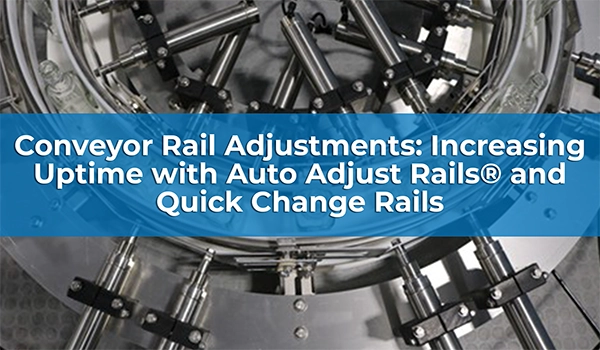
Many plants are moving to automated rail adjustment systems to eliminate these challenges.
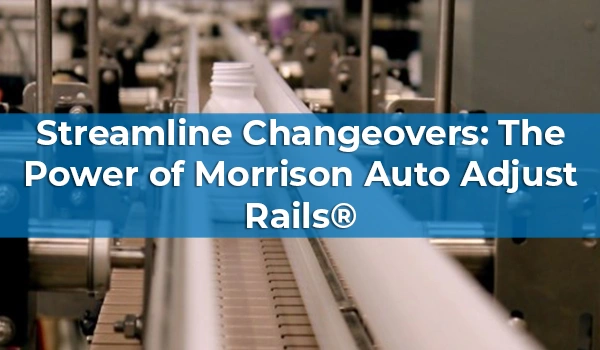
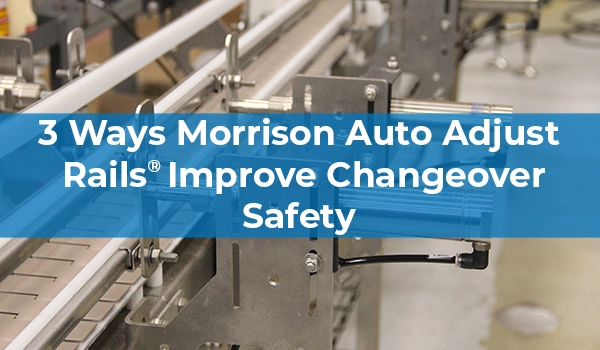
Instead of manual repositioning, operators can adjust rails with a push of a button—keeping them out of hazardous areas and improving consistency.
Advanced systems use preset recipes to automatically position rails for different container sizes, reducing changeover time and removing guesswork.
Solutions like Auto Adjust Rails® demonstrate how automation can:
- Improve safety by removing hands-on adjustments
- Deliver repeatable, precise positioning
- Reduce jams, tipping, and downtime
- Minimize operator dependency
A Smarter Approach to Changeovers
As production demands grow, manual rail adjustments are becoming harder to justify.
Automating this process helps create safer, more consistent, and more efficient packaging lines—without requiring a complete system overhaul.
If improving safety and reducing downtime are priorities, it may be time to rethink how your rails are adjusted. Get a quote today.
Contact Information:
- Phone: +1(708) 756-6660
- Email: info@morrison-chs.com