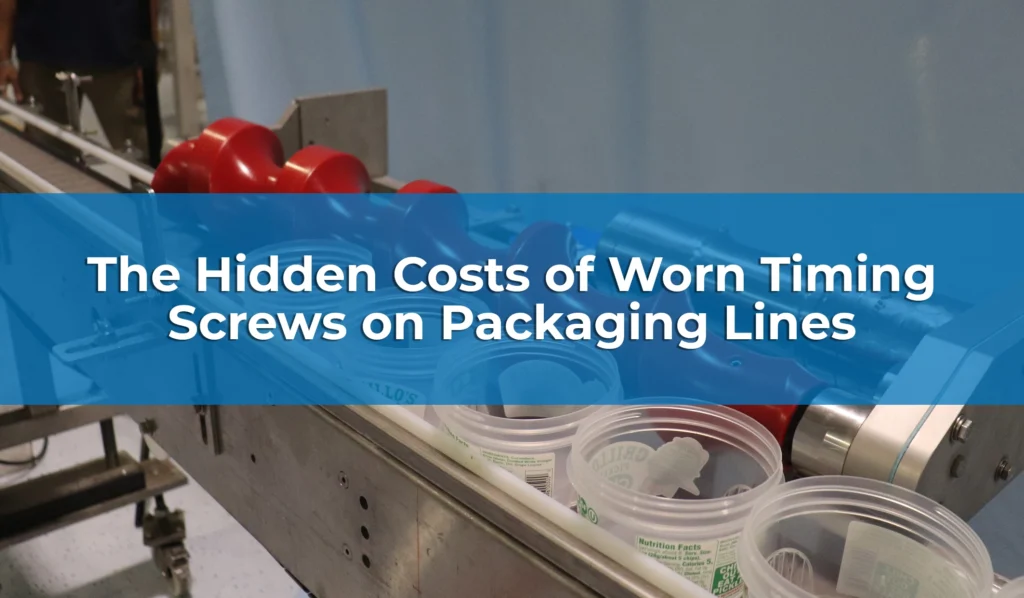
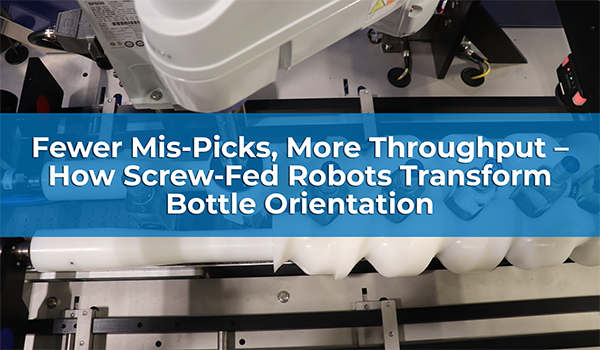
Are worn timing screws contributing to recurring downtime in your packaging or container handling system?
It’s easy to miss the signs—your line is still running, with no major breakdowns or obvious failures. But performance isn’t quite where it should be. Container spacing becomes inconsistent. Micro-stoppages increase. Operators make more frequent adjustments. Line speed slowly trends downward, and OEE (overall equipment effectiveness) begins to slip.
Worn timing screws rarely fail in dramatic fashion. Instead, they create subtle performance losses that compound over time — quietly reducing throughput, stability, and overall line efficiency.
What Happens When Timing Screws Wear in Packaging Lines
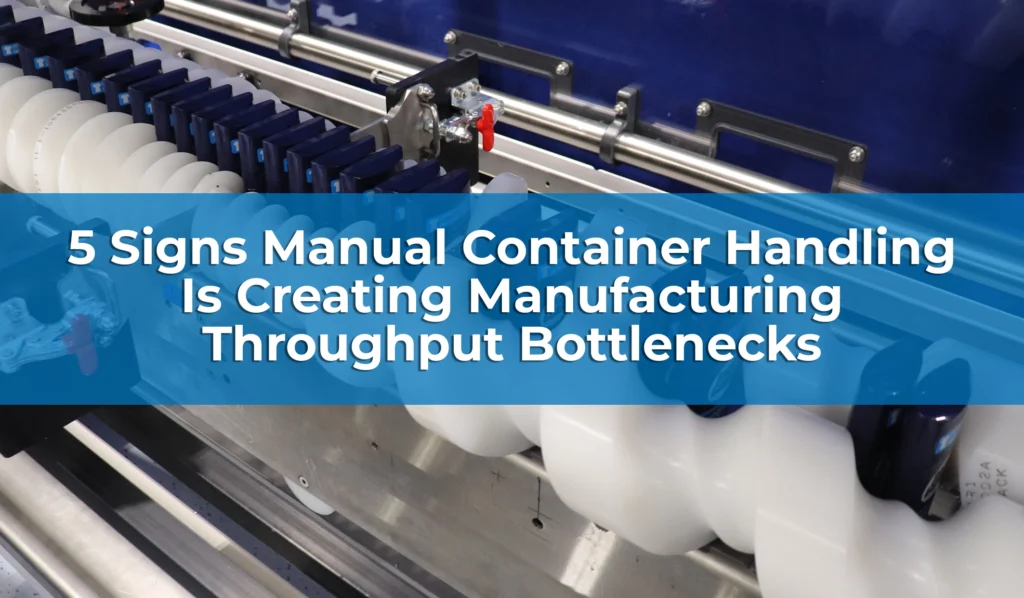
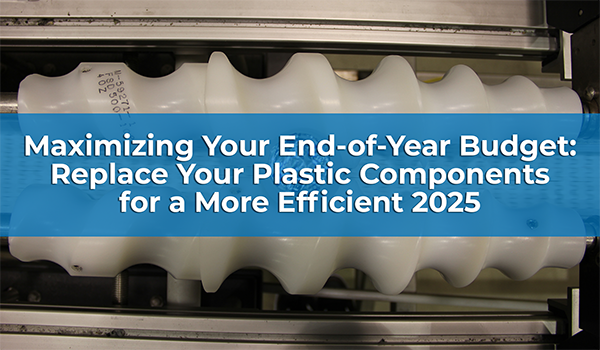
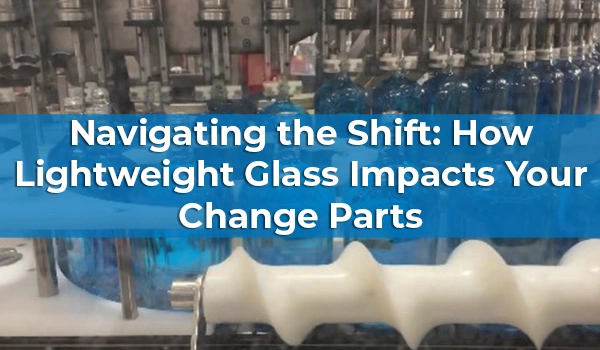
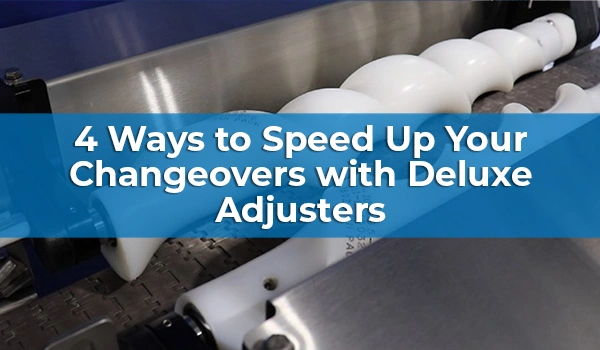
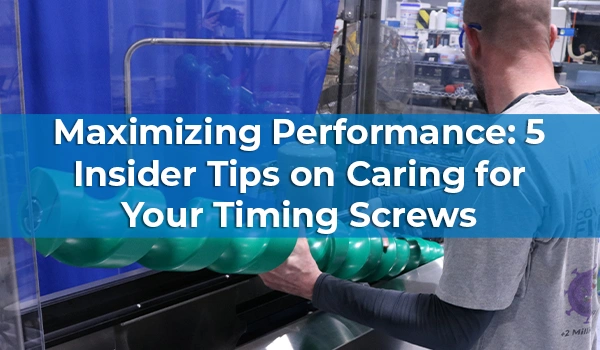
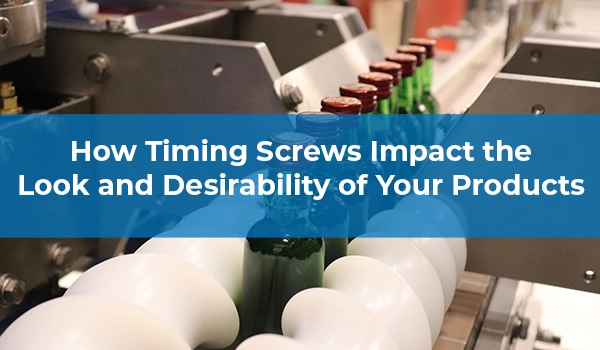
Timing screw wear can affect several aspects of container handling performance. Over time, changes in geometry, pitch, and surface condition can disrupt container spacing and overall packaging line efficiency.
Gradual Loss of Dimensional Accuracy
Timing screws are manufactured with precise dimensions. Over time, repeated contact with containers causes edges, grooves, and guiding surfaces to wear down. These small dimensional changes may seem minor, but they can gradually contribute to packaging line downtime and reduced throughput. Even small dimensional changes can affect how containers are captured and released, which can lead to container jams, misfeeds, or additional operator adjustments.
Surface Wear and Friction Changes
Timing screws are also designed with specific materials and surface finishes to control how containers move through the screw path. As these surfaces wear, friction characteristics change. Increased friction can create vibration, noise, and inconsistent container movement, particularly at higher line speeds. In some cases, it can also lead to container scuffing or cosmetic damage.
Loss of Proper Container Spacing
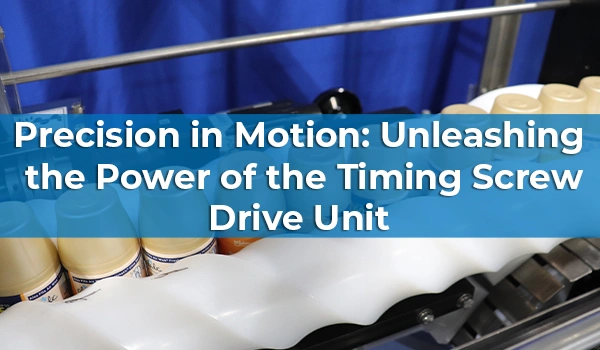
One of the primary functions of a timing screw is to establish and maintain consistent spacing between containers before they enter the next stage of the packaging line. When wear affects the screw’s geometry, pitch, or surface condition, containers may enter the screw unevenly. Spacing becomes inconsistent, and downstream equipment may struggle to accept containers smoothly.
Signs Worn Timing Screws Need Replacement
Signs your timing screws need replacement include:
- Visible edge rounding or groove distortion
- Increased container scuffing
- Noise or vibration increase
- Inconsistent handoff between components
- More frequent changeover adjustments
- Operators frequently “babysitting” the line
Planned vs. Unplanned Timing Screw Replacement: The True Cost of Downtime
Timing screws often wear gradually, making it easy to delay replacement. The line keeps running—but the difference between planned and delayed replacement has a major impact on efficiency, cost, and stability.
Planned replacement is handled during scheduled downtime, minimizing disruption and allowing proper installation and alignment. This helps maintain container control and ensures smooth operation before full production resumes.
Delayed replacement allows wear to progress until issues escalate—leading to jams, tipping, sensor faults, and unplanned downtime. These disruptions can ripple across the line, increasing scrap, troubleshooting time, and overall cost.
In many cases, the cost of emergency replacement and lost production exceeds that of a planned maintenance event.
Don’t Wait for Timing Screw Failure to Impact Line Efficiency
Worn timing screws rarely fail abruptly. Instead, they continue operating while gradually losing the precision required to guide containers effectively through the line. Because this degradation occurs over time, its impact often presents as minor performance issues rather than a single, obvious failure.
Over time, those small issues can compound. Container spacing becomes less consistent. Micro-stoppages increase. Operators make more adjustments to keep the line stable. What appears to be normal variation in performance may actually be the result of timing screw wear affecting container control.
Regular inspection and timely replacement help prevent these gradual losses from turning into larger disruptions. By identifying wear early, maintenance teams can address the issue during planned downtime and maintain consistent line performance.
If you suspect timing screw wear is affecting your packaging line, a dimensional review can reveal performance losses before they become shutdowns.
Contact Information:
- Phone: +1(708) 756-6660
- Email: info@morrison-chs.com