Inverting containers is a critical step in many packaging and manufacturing processes. On modern packaging lines, containers are often rotated up to 360° to support operations such as rinsing, sanitation, inspection, labeling, filling, and capping.
Choosing the right inversion mechanism directly impacts line efficiency, product quality, and uptime. Two of the most common solutions for container inversion are twist blocks and timing screws. While they serve the similar purposes, they are not always interchangeable.
Read on to find out how twist blocks and timing screws work, their ideal applications, and how to choose the best option for your packaging lines.
Understanding Container Inverting Mechanisms
Twist blocks and timing screws are both widely used for container inversion, but they solve different problems. The best mechanism depends on factors such as:
- Container durability and shape
- Required precision and repeatability
- Line speed and throughput
- Sanitation requirements
- Maintenance and cost considerations
Twist Blocks for Container Inversion
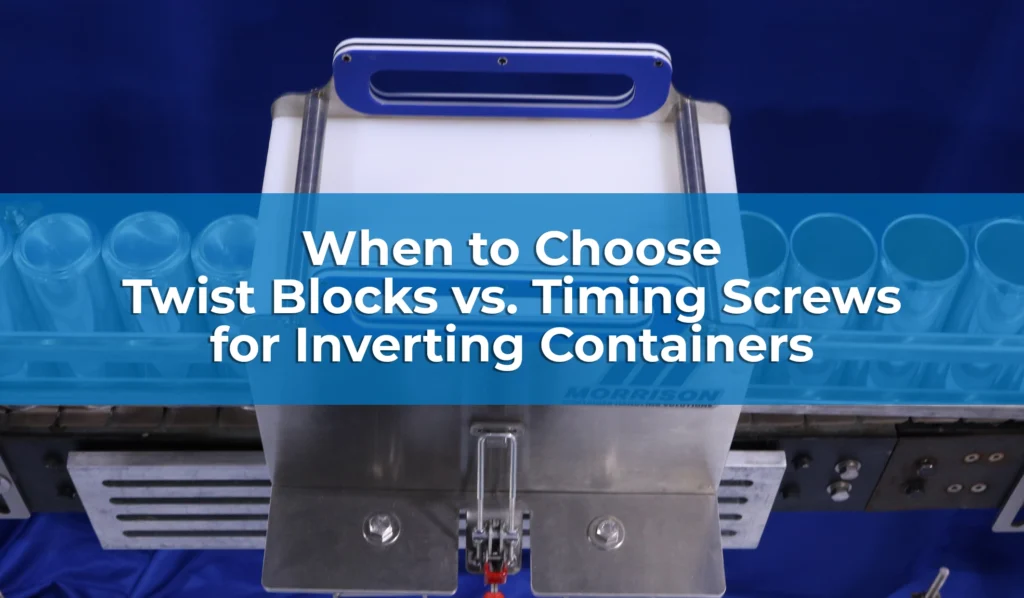
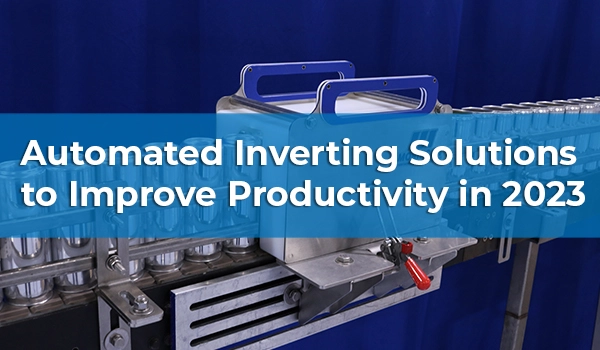
Twist blocks are passive container inverting devices that mount directly to conveyors. As containers pass through a machined internal geometry—typically made from UHMW plastic—they are rotated 90°, 180°, or up to 360° using line motion and backlog pressure.
Because twist blocks have no motors or controls, they offer a simple, reliable solution for many high-speed applications.
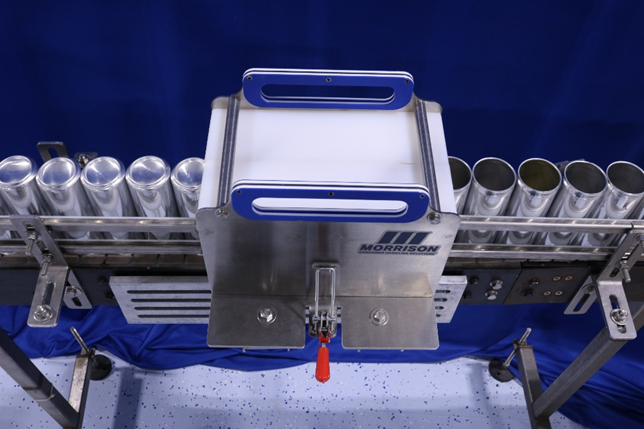
Typical Twist Block Applications:
- 180° inversion for rinsing, draining, or sanitizing
- Flipping containers cap-up to cap-down (and vice versa)
- Inversion for vision inspection or label/date coding
- Simple orientation changes before case packing
- High-speed lines with rigid or semi-rigid containers
- Retrofit solutions for existing conveyor systems
Pros of Twist Blocks for Container Rotation:
- Simple mounting and compact footprint (typically 12-18”)
- Passive operation (no motors or controls)
- Lower upfront cost
- High reliability due to simple mechanics
- Low maintenance and easy cleaning (UHMW wear surfaces)
- Capable of very high line speeds
- Fast changeover when container styles are similar
- Retro-fit friendly for existing conveyor frames
Cons of Twist Blocks for Container Rotation:
- Requires backlog or line pressure to function
- Less precise orientation control
- Container-specific geometry limits flexibility
- Not ideal for tall or top-heavy containers, very lightweight containers, fragile or easily scuffed surfaces
- Sensitive to infeed conditions and container consistency
Timing Screws for Container Inversion
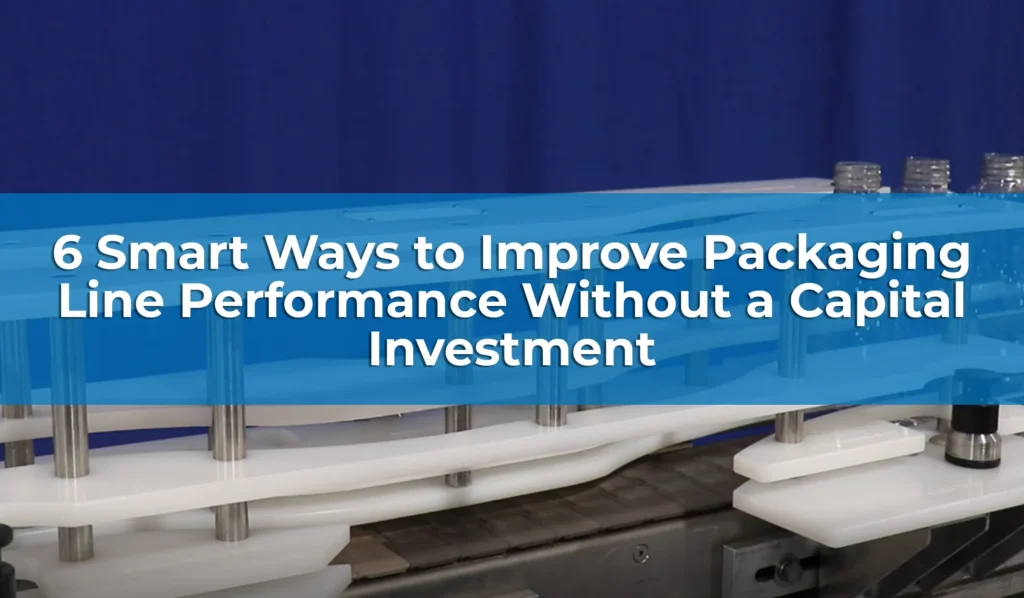
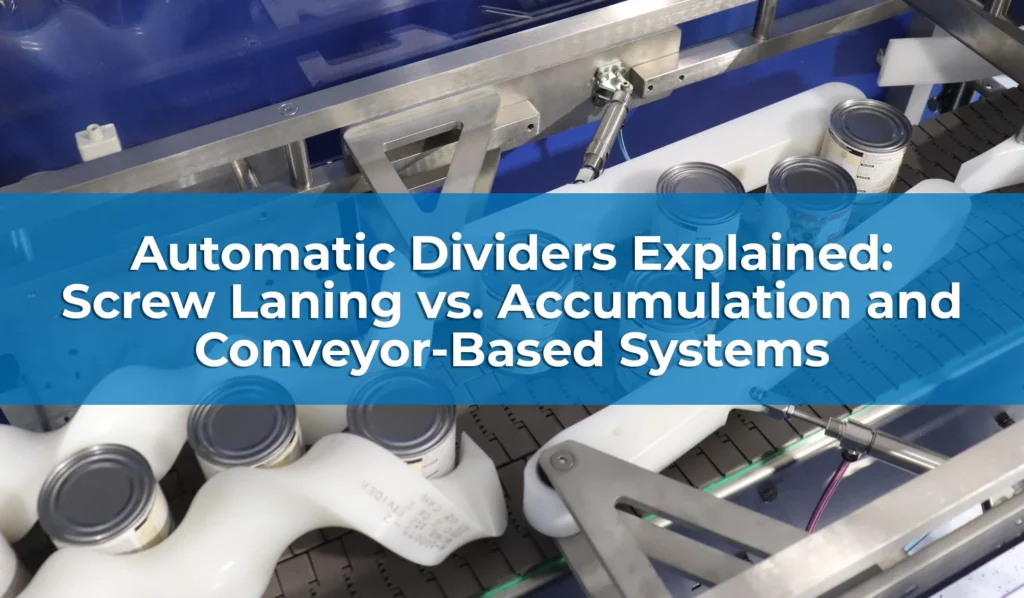
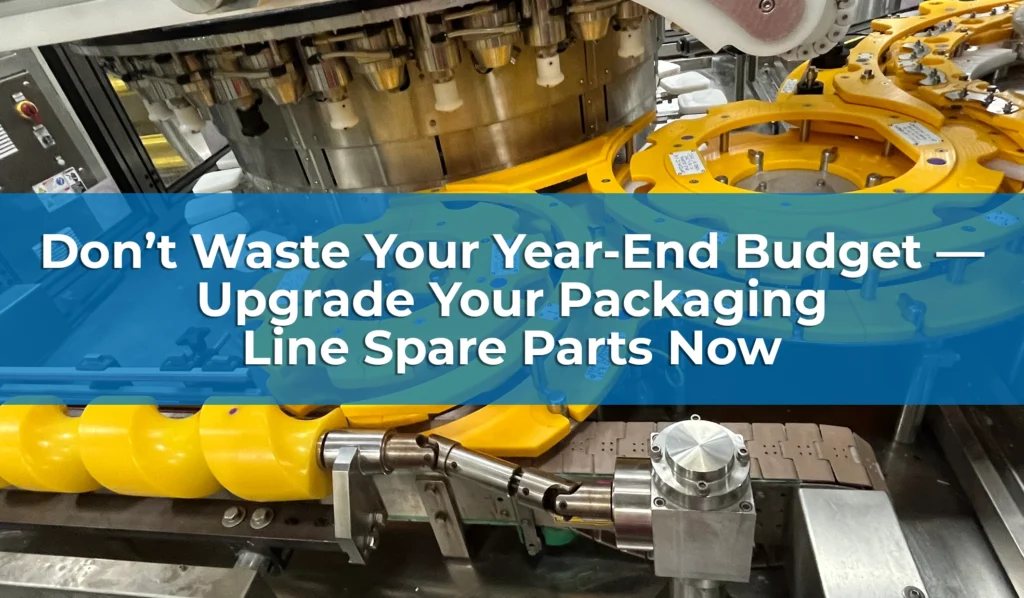
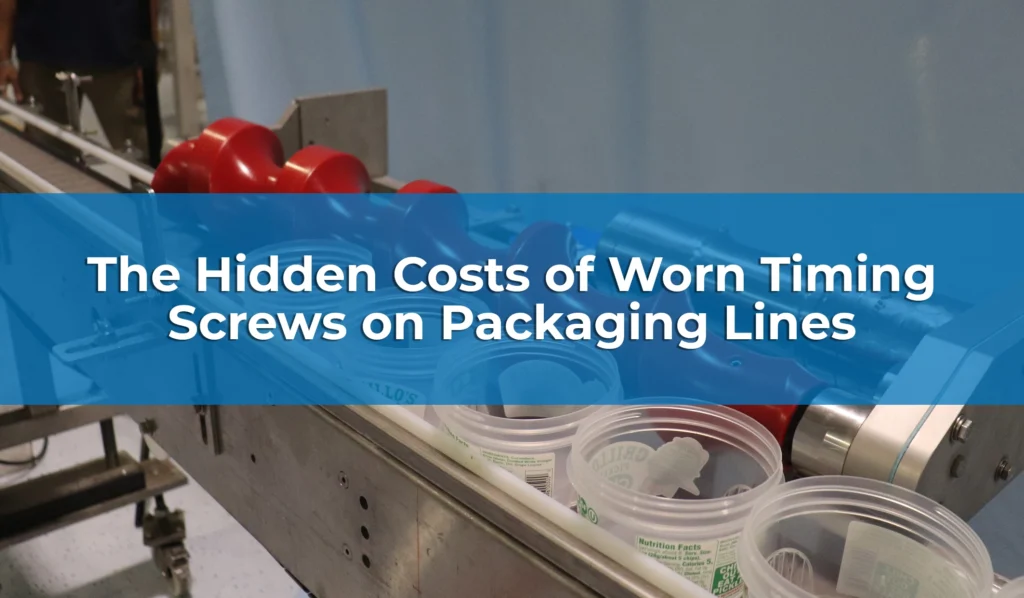
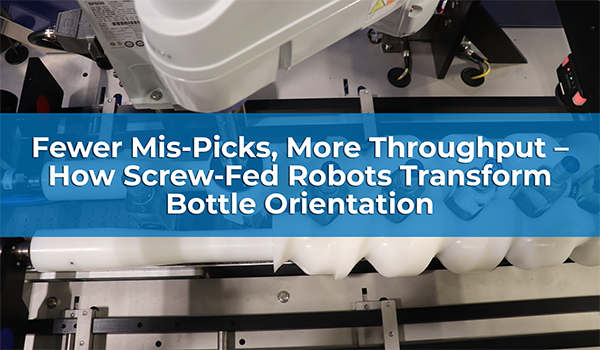
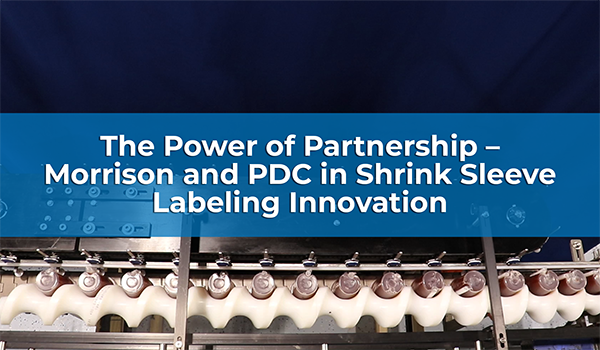
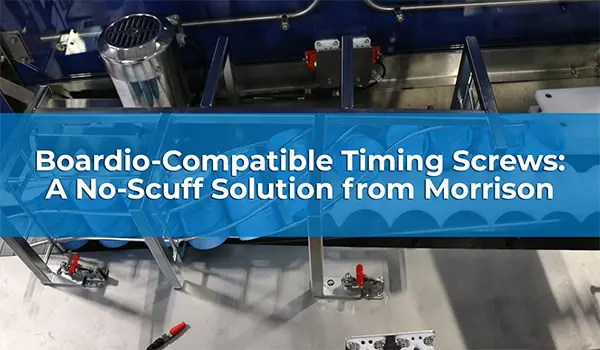
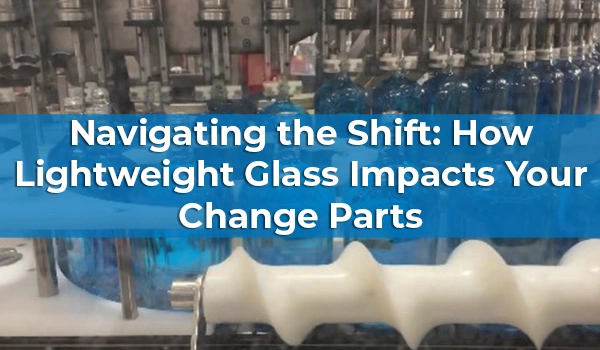
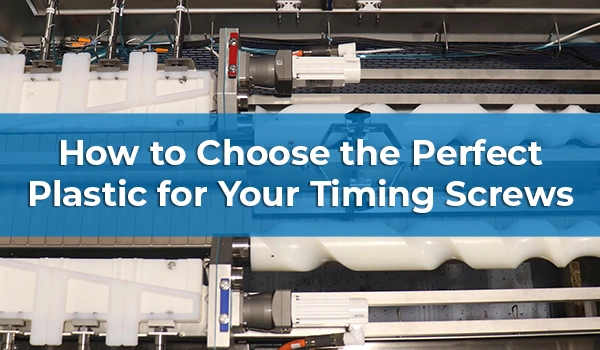
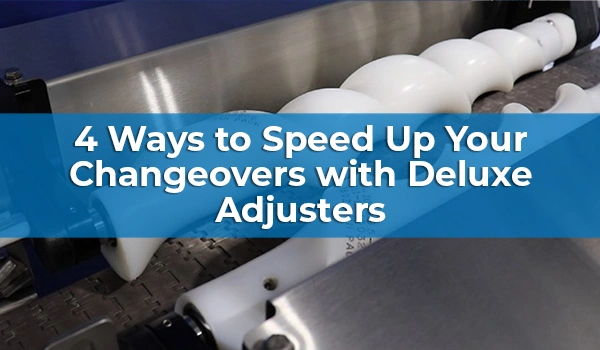
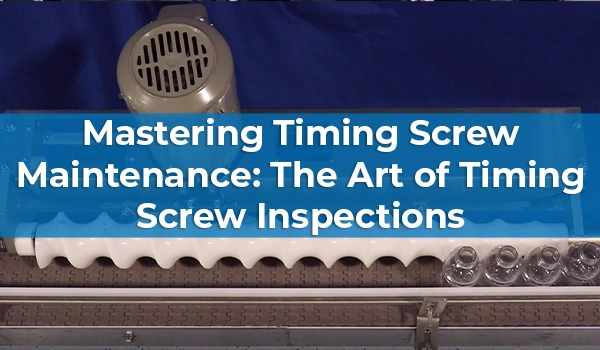
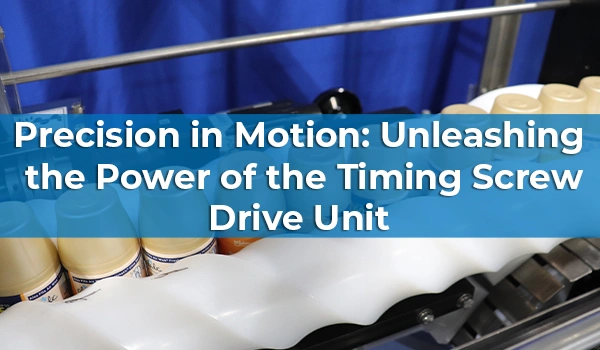
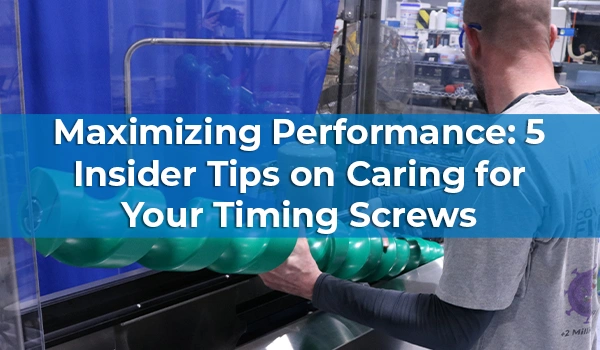
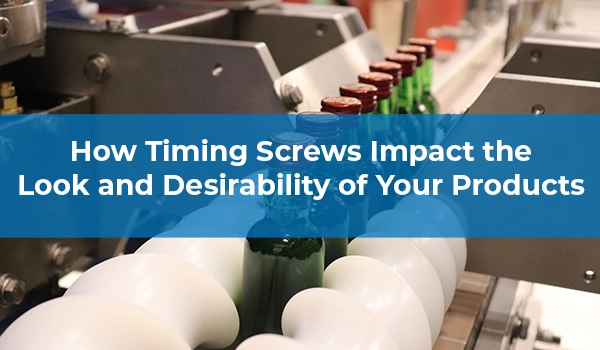
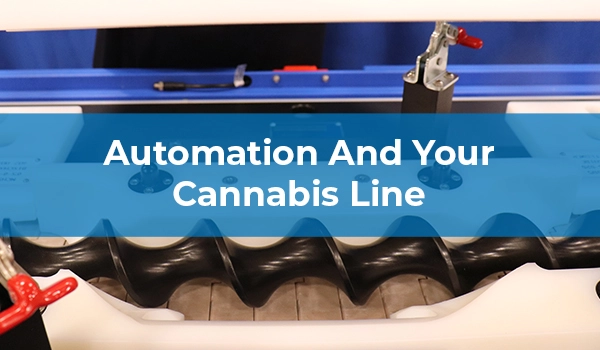
Timing screws (also called feed screws or auger screws) are rotating, machined components that provide positive control of individual containers. For inversion applications, the screw profile is designed to gradually rotate or tilt each container 90° or 180°, or to partially rotate the container before handing it off to downstream guides.
Unlike twist blocks, timing screws do not rely on backlog pressure, making them ideal for applications where precision and protection are critical.
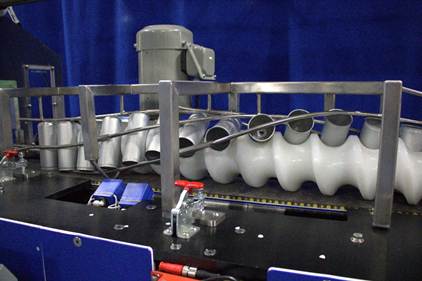
Typical Timing Screw Inversion Applications:
- Lightweight, unstable, or high-value containers
- Precise 90° or 180° inversion before critical processes
- Inversion ahead of filling, capping, or sealing
- Applications requiring exact spacing and orientation
- Lines where backlog pressure is undesirable
- Integration with servo-driven or synchronized equipment
Pros of Timing Screws for Container Rotation:
- Immediate and precise orientation control
- Exact container spacing and repeatable positioning
- Positive, one-at-a-time container handling
- Highly consistent performance at speed
- Suitable for random or inconsistent infeed
- Performs well when passive systems struggle
- Combines spacing and inversion in a single device
- Ideal for unstable or irregular container shapes
Cons of Timing Screws for Container Rotation:
- Requires a higher level of engineering and system integration
- Requires power and synchronization
- More complex installation and setup
- Container-specific screw geometry
- Slower changeovers compared to passive systems
- Wear over time affects accuracy
Factors to Consider When Choosing Container Inversion Mechanisms
When deciding between twist blocks and timing screws, consider the following:
- Container Shape & Material
Durable, uniform containers often work well with twist blocks. Fragile or irregular containers benefit from the controlled handling of timing screws. - Line Speed & Throughput
Twist blocks excel on high-speed lines. Timing screws are better suited for moderate speeds where precision is critical. - Precision & Repeatability
Timing screws provide superior control for applications involving labeling, filling, or sealing. Twist blocks are sufficient for basic inversion tasks. - Maintenance & Downtime
Twist blocks offer quick changeovers and minimal maintenance. Timing screws require more setup time and periodic inspection. - Cost Considerations
Twist blocks have lower upfront costs. Timing screws require a higher initial investment but can reduce product loss and downtime with sensitive containers.
Real-World Use Cases for Container Inversion
Example 1 – Twist Blocks
High-Speed Beverage Bottles (Durability Matters More Than Precision)
A carbonated beverage producer runs durable PET soda bottles at very high speeds. Containers must be inverted 180° prior to a rinse and drain step, but precise rotational alignment is not required—only that bottles exit cap-down.
Because the bottles are lightweight, uniform, and able to tolerate backlog pressure, a passive twist block provides a reliable, low-maintenance solution with no motors, no controls, and minimal footprint.
Why it works:
- High speed with low complexity
- Minimal precision required
- Durable containers tolerate contact and scuffing
Example 2 – Timing Screws
Gourmet Sauce Jars (Precision & Protection Matter)
A specialty foods manufacturer handles fragile glass sauce jars that must be inverted prior to inspection and filling. These containers require exact spacing and alignment to prevent breakage and ensure downstream accuracy.
A timing screw inverter captures each jar individually, controls spacing, and gradually rotates the container. By eliminating backlog pressure, the system significantly reduces the risk of damage and delivers a stable, repeatable presentation downstream.
Why it works
- One-at-a-time container control
- Exact orientation and spacing
- Reduced breakage risk
Quick Decision Checklist: Twist Blocks vs. Timing Screws
| Factor | Twist Blocks | Timing Screws |
| Container Type | Uniform, durable | Fragile, irregular |
| Speed | High | Moderate to High |
| Precision | Low to medium | High |
| Maintenance | Low | Medium to high |
| Cost | Low upfront | Higher upfront |
Start Inverting Containers with Confidence
Twist blocks and timing screws are both proven solutions for container inversion, but they serve very different needs. Choosing the right mechanism depends on container durability, required precision, line speed, maintenance expectations, and cost.
If your operation requires precise container handling and packaging line efficiency, Morrison Container Handling Solutions can help. From timing screws and change parts to fully custom container handling equipment, we design solutions that keep packaging lines running smoothly.
Contact us to request a quote or discuss a solution tailored to your operation.
Contact Info:
Email: info@morrison-chs.com
Phone: +1(708) 756-6660