Reducing changeover times on CPG production lines is a top priority for manufacturers managing shorter runs, more SKUs, and increasing pressure to improve overall equipment effectiveness (OEE).
Every minute spent adjusting equipment during a container size change is lost production time. By combining standardized changeover practices with quick-change container handling solutions, CPG manufacturers can significantly reduce downtime while improving consistency and safety.
Below are proven ways to reduce changeover times on packaging and processing lines, starting with process improvements and followed by equipment-based solutions.
Why Changeover Time Matters in CPG Manufacturing
Extended changeovers increase operating costs due to:
- Manual adjustments that vary by operator
- Tool-heavy setups that slow production restarts
- Inconsistent container alignment between runs
- Increased safety exposure during manual adjustments
For high-SKU CPG operations, inefficient changeovers quickly eat away at throughput and schedule reliability. From saving minutes to hours, here are ways CPGs are significantly cutting down on changeover times and increasing uptime.
1. Standardize Changeover Procedures and Work Instructions
One of the most effective and lowest-cost ways to reduce changeover time is to standardize how changeovers are performed. Implementing best practices for changeovers and communicating them throughout the team can help everyone work in the same direction while creating downtime reductions.
Best Practices for Standardized Changeovers
- Create step-by-step changeover checklists
- Use visual aids (photos, diagrams, or color coding you change parts based on container size)
- Clearly define who performs each task
- Document target changeover times by SKU or container size
Standardized procedures reduce variability between operators and shifts while making training faster and more consistent.
2. Improve Operator Training and Pre-Stage Changeover Components
Even the best equipment cannot overcome poor preparation. Investing in operator training and pre-staging significantly reduces changeover delays.
How Training and Preparation Reduce Downtime
- Train operators on changeover sequence and setup order
- Pre-stage parts, tools, and containers before the line stops
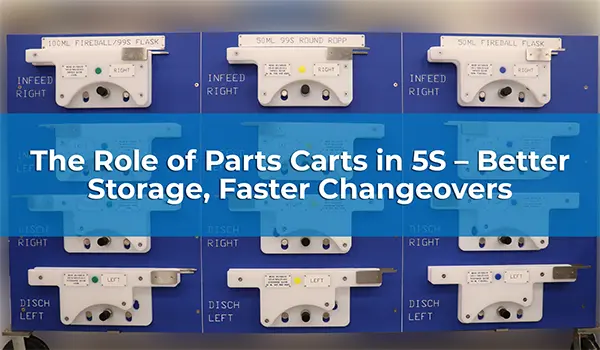
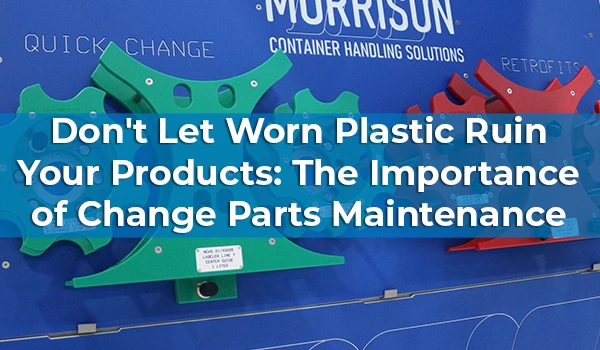
- Use shadow boards or labeled storage like parts carts for change parts
- Cross-train operators to avoid waiting on specific personnel
Well-trained teams with staged components can complete changeovers faster and with fewer mistakes.
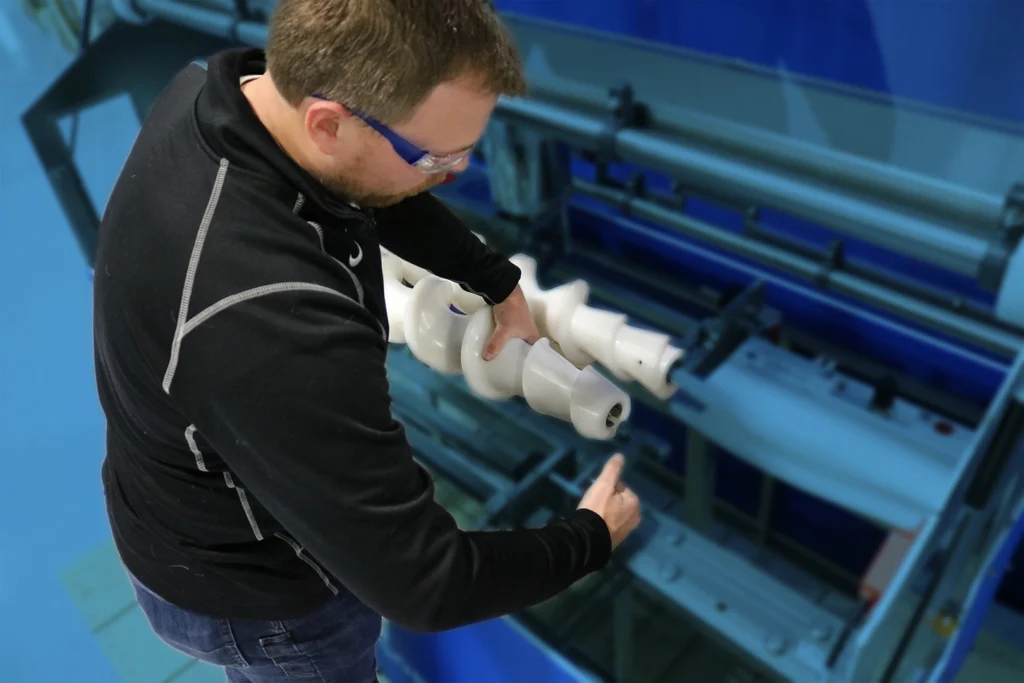
3. Reduce Timing Screw Changeover Time with Quick-Change Upgrades
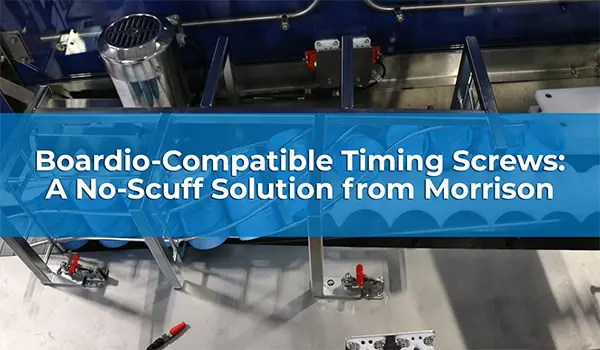
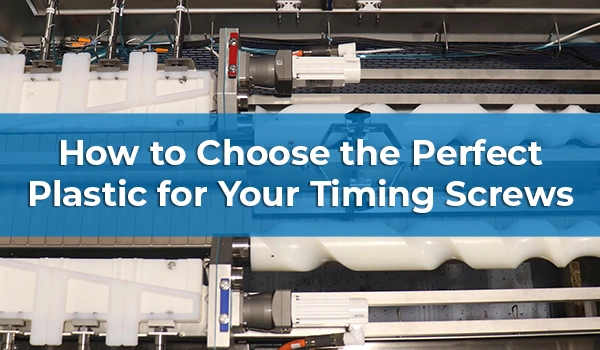
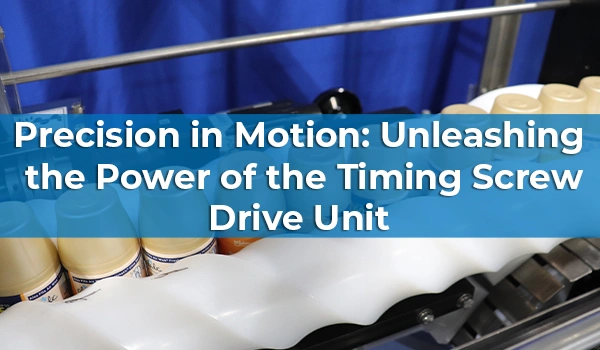
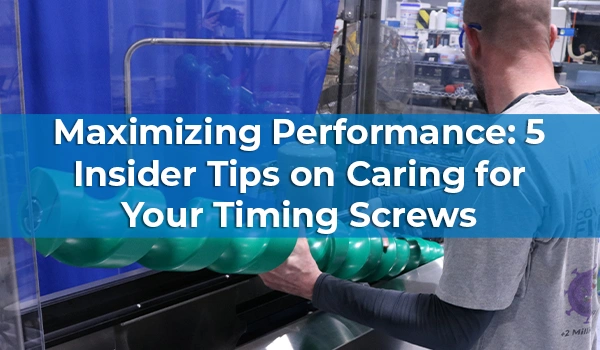
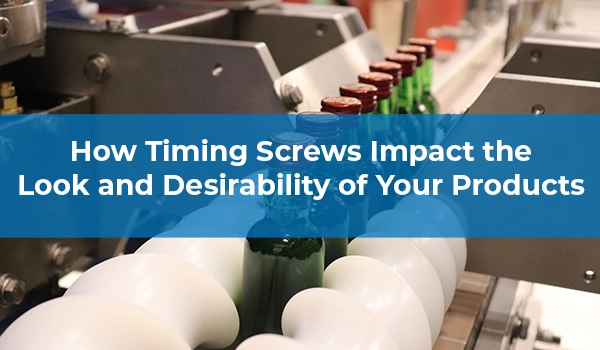
Timing screws are critical for container spacing, indexing, and flow control on CPG production lines. Traditional timing screw changeovers can be slow when screws must be unbolted, aligned, and manually adjusted.
Morrison Timing Screw Quick-Change Solutions
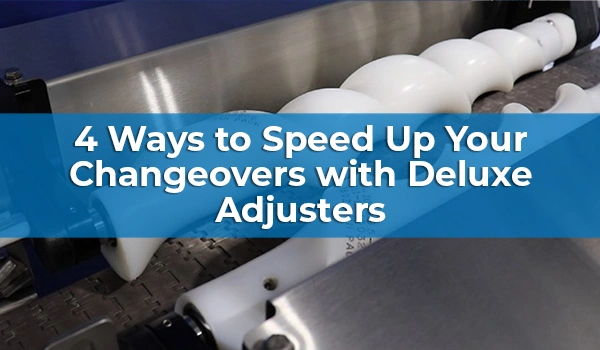
Morrison helps manufacturers reduce timing screw changeover time through quick-change upgrades such as:
- Square driver timing screw connection for fast, consistent installation
- DESTACO clamp quick releases that create tool-less changeover
- Repeatable positioning to reduce startup adjustments with deluxe adjuster positioning
These upgrades allow operators to swap timing screws quickly and restart production with confidence.
4. Speed Up Changeovers with Quick-Change Stars and Guides
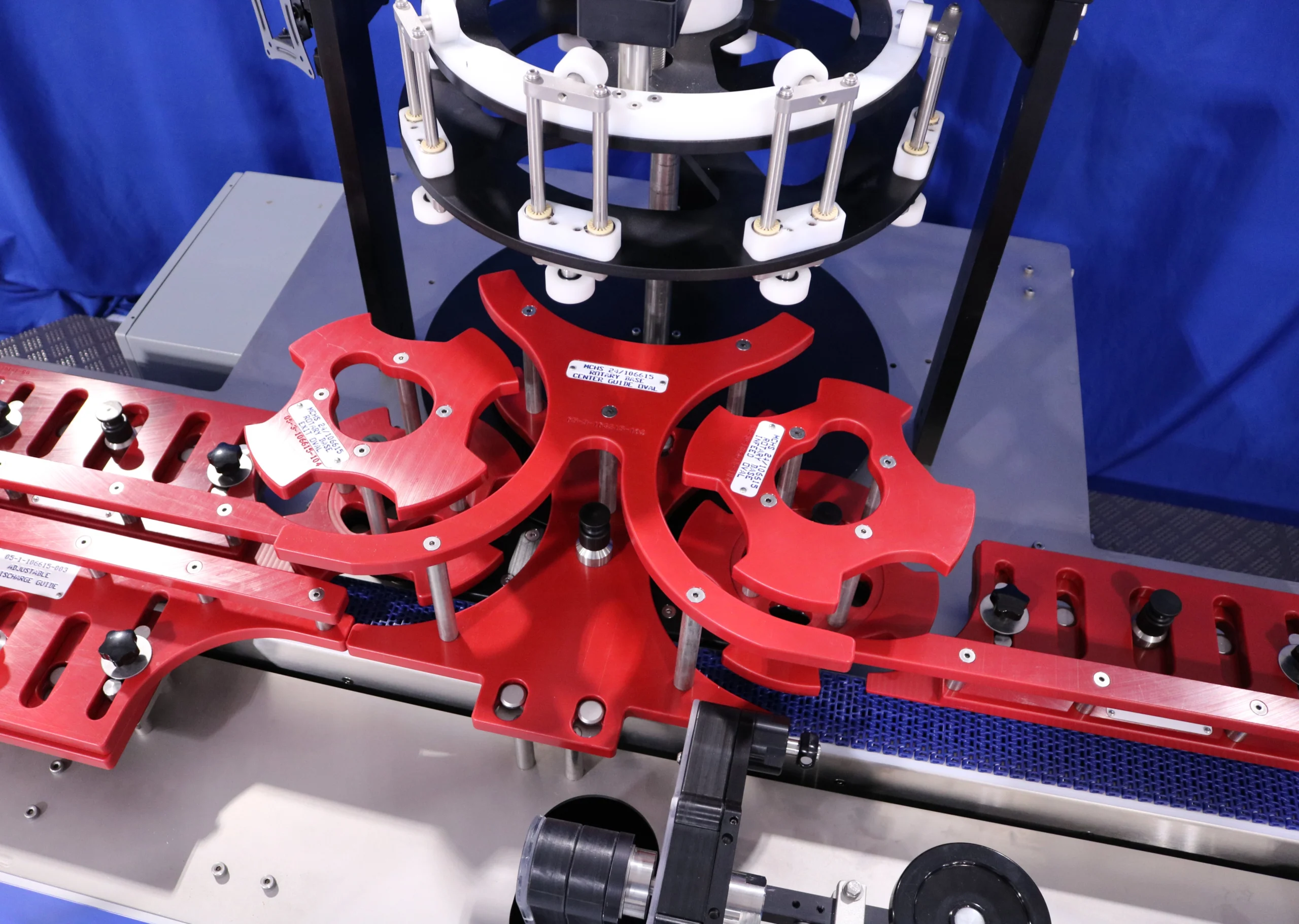
Star wheels and guides often contribute to extended changeover times due to manual alignment and tool-heavy adjustments. For CPGs with multiple SKUs, retrofitting equipment for quick changeover parts can create tool-less changeovers that save hours and create shifts worth of uptime.
Core Plate Mounting for Faster Changeovers
- Minimal or no tools required
- Repeatable positioning for consistent results
- Reduced reliance on operator experience
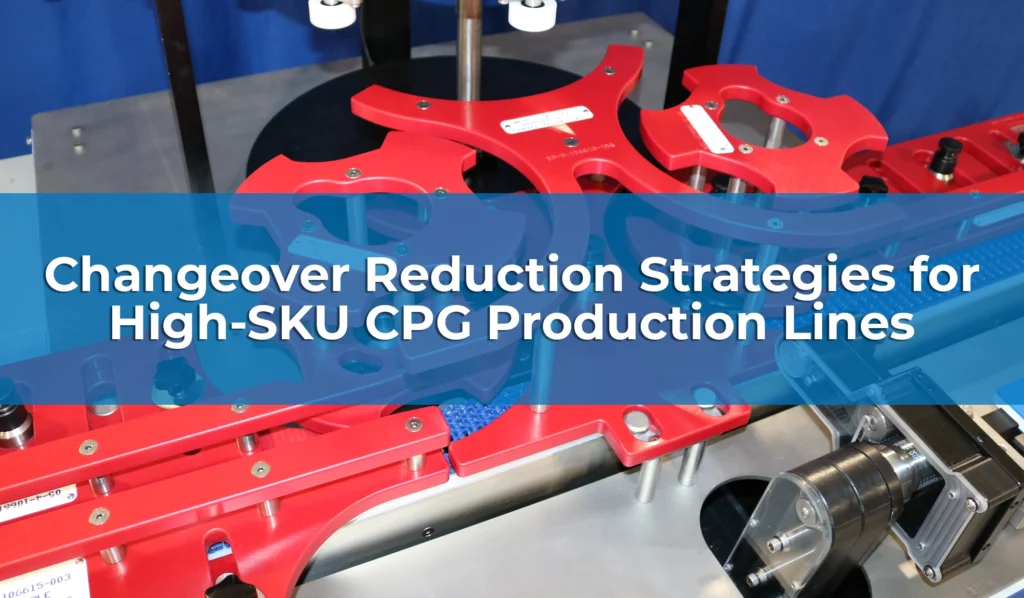
Core plate mounting systems simplify star and guide changeovers while improving reliability between runs by installing an aftermarket core plate outfitted with mushrooms that change parts lock into with a spring-loaded handknob. Watch this video for a demo.
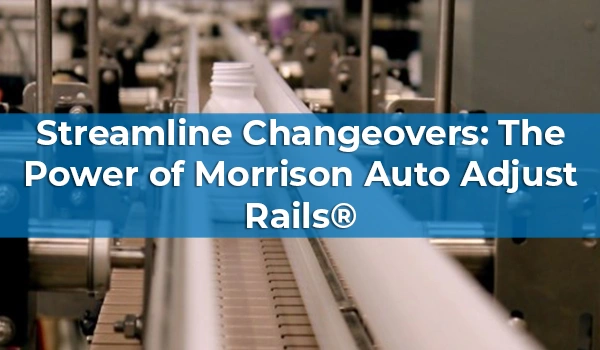
5. Eliminate Manual Adjustments with Auto Adjust Rails
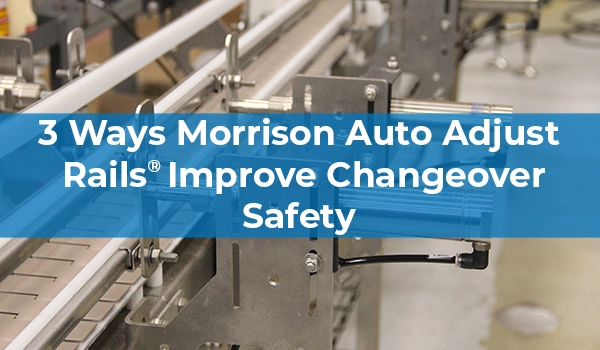
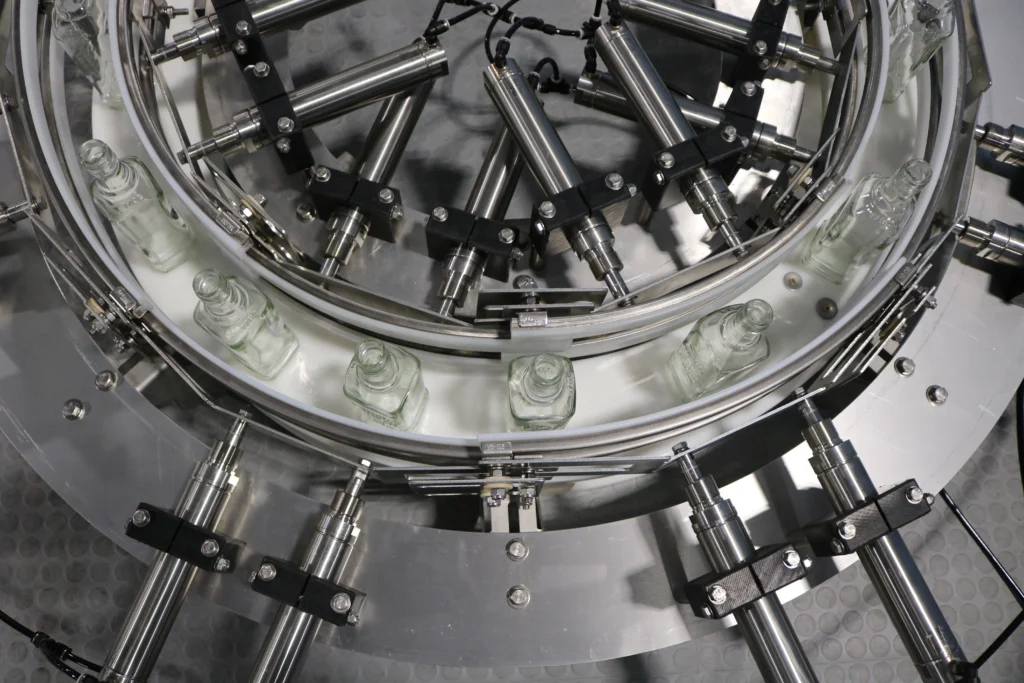
Manual guide rail adjustments are a major source of downtime on packaging lines, especially across long conveyor runs, corners, or overhead conveyor configurations. Beyond the numerous safety concerns they can pose, manual rail adjustments quickly eat away at uptime.
Upgrading to easy adjust conveyor rail systems, even in just key areas such as overhead conveyors or corners, can have big impact long term.
Benefits of Auto-Adjust Rail Systems
- Push-button or recipe-driven adjustments
- Simultaneous rail movement across the line
- Improved operator safety and consistency
- Infinite adjustability provide flexibility to add future container sizes
- Budget friendly allowing plants to upgrade section by section rather than forced to upgrade an entire line
Auto adjust rails are ideal for high-SKU CPG environments with frequent container size changes.
Designing a Faster, More Flexible CPG Production Line
Reducing changeover times on CPG production lines requires both process discipline and equipment design.
There’s no single fix. Real improvement happens when manufacturers focus on both how changeovers are performed and how equipment is designed to support faster transitions. Using the options outlined above, CPG manufacturers can improve uptime, reduce labor costs, and maintain consistent container handling across every SKU.