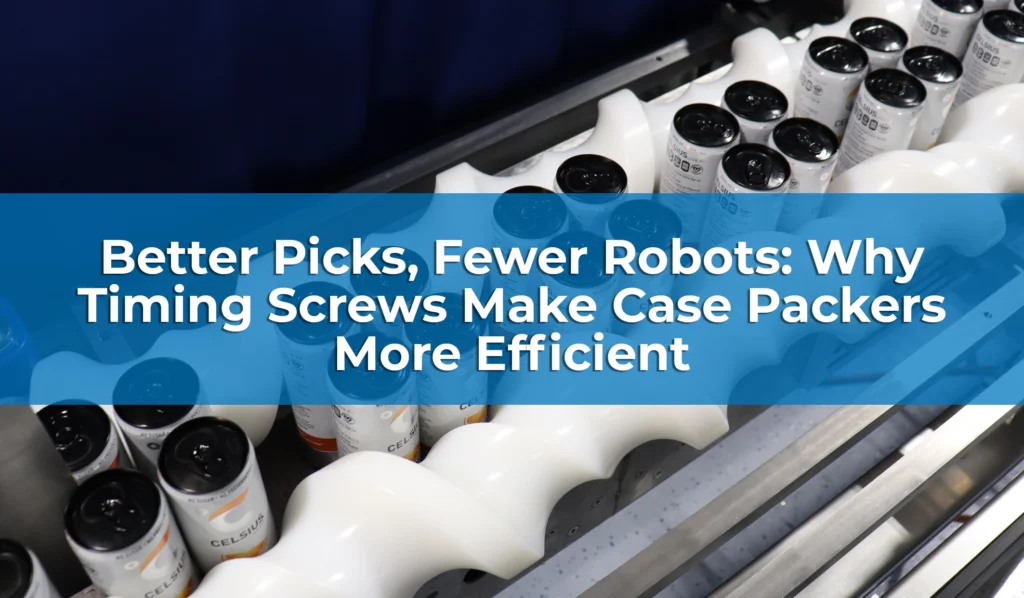
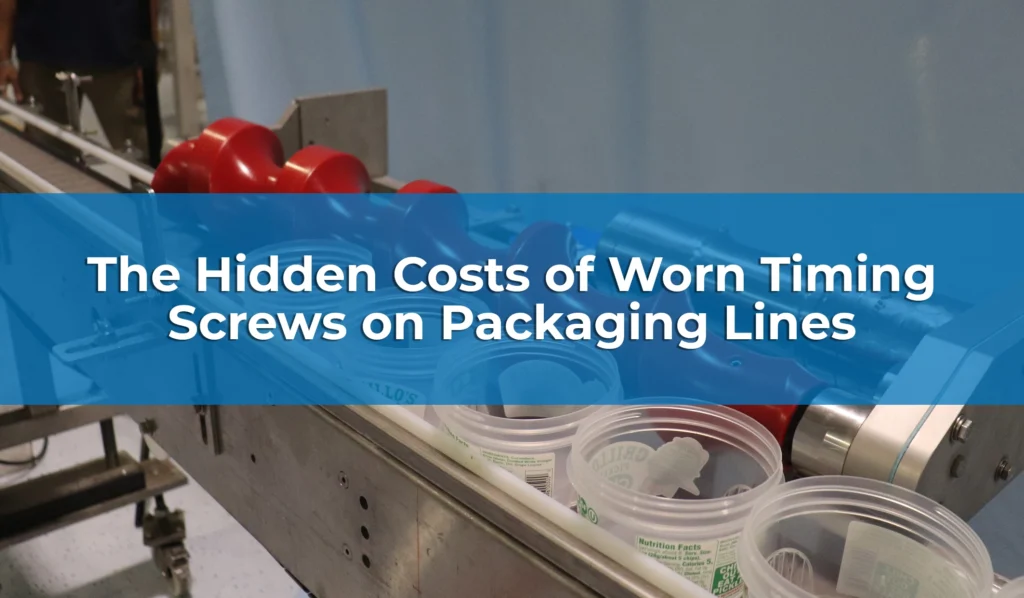
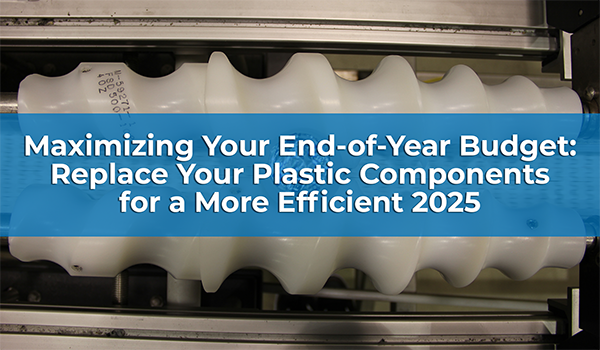
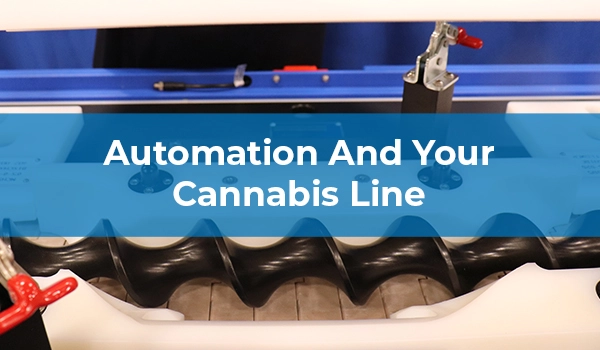
Case packer OEMs are under constant pressure to deliver machines that are faster, more reliable, and easier for end users to operate and maintain while still maintaining ROI and reducing complexity. While there are many ways to handle product flow, orientation, and counting for pack pattern creation prior to case packing, timing screws remain one of the most effective and reliable technologies for creating repeatability within case packer operation.
Here’s why screws continue to play a critical role in successful case packing systems.
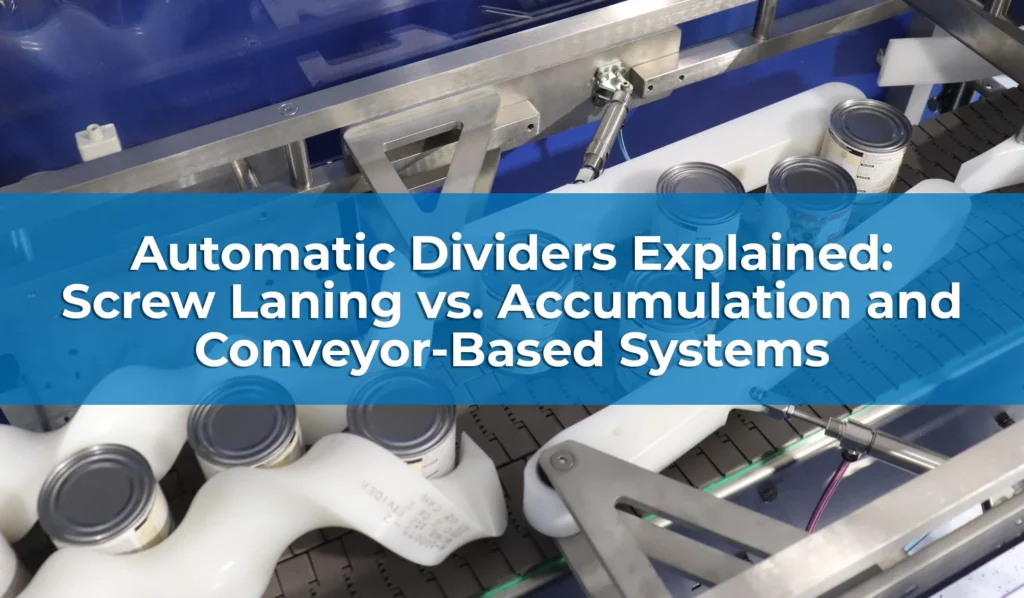
Consistent Laning and Accurate Counting without the Complexity
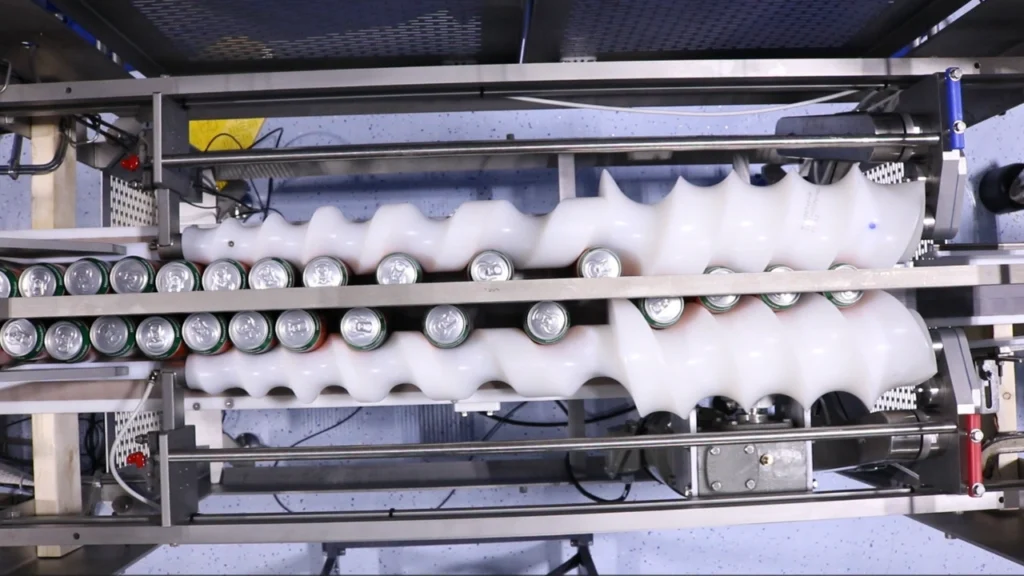
In many case packing applications, containers must be laned consistently and presented in precise quantities. Timing screws excel at both.
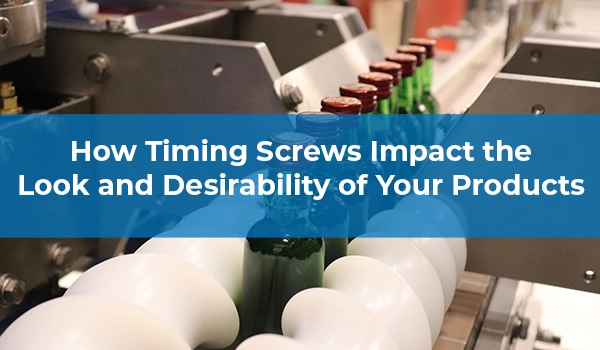
By controlling container spacing and flow, screws:
- Present product evenly across multiple lanes
- Maintain a consistent pitch between containers
- Accurately control and count how many containers pass through
This level of mechanical precision is difficult to match with alternative technologies.
The Alternative: Slug Feeding via Belts
Slug feeding systems typically rely on belts and indexing motions to group containers before packing. While functional, these systems introduce several challenges:
- Indexing slows line speeds, creating bottlenecks upstream
- More complex “smart feed” technologies are often required, adding cost
- Side-gripper belt systems are less precise at counting containers
- Additional sensors and product detection are needed to compensate, increasing system complexity and maintenance
Timing screws eliminate many of these issues by mechanically controlling container position and count in a continuous motion, supporting higher throughput and more reliable performance.
Simplifying Product Orientation for Easier Case Packing
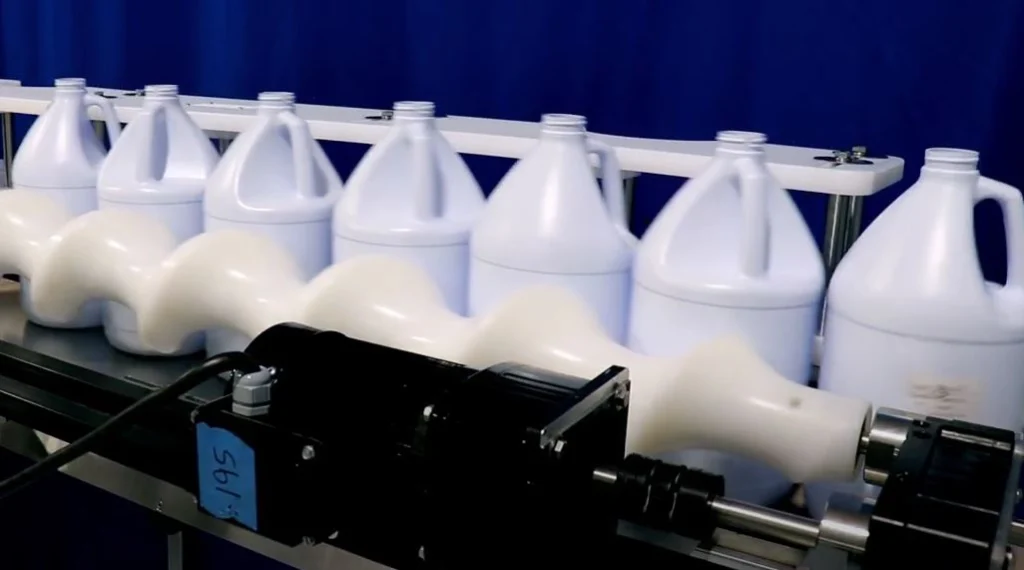
Many case packers require containers to be rotated or reoriented from standard product flow to make packing more efficient in the case (or allow for more containers to fix in one box in a stable fashion).
Without screws, OEMs may need to rely on:
- Additional robots
- Complex tooling and pick patterns
- Advanced vision systems
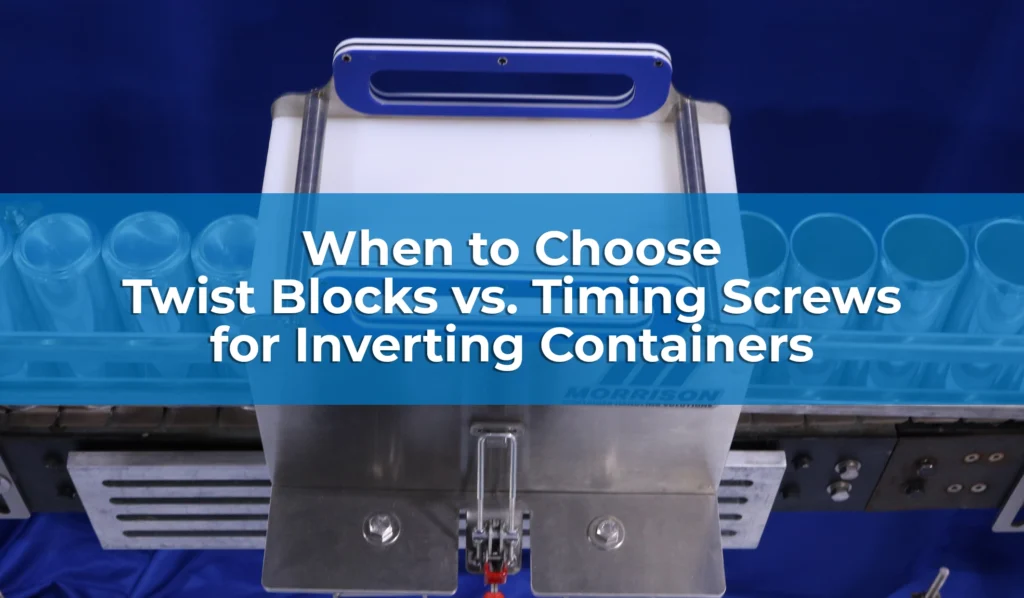
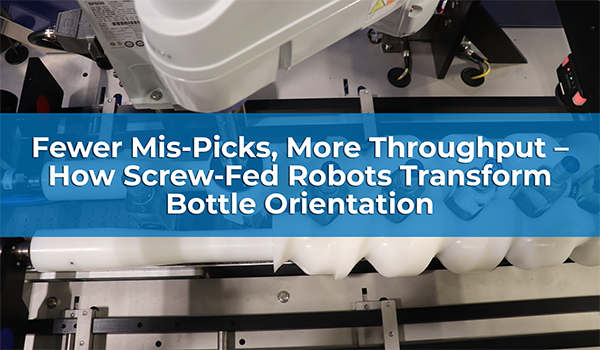
Timing screws can mechanically rotate and orient containers before they reach the case packer, all with continuous motion, simplifying downstream operations. This reduces engineering effort, shortens development timelines, and results in a more robust overall machine design.
A More Standard, Proven Case Packer Design
From an OEM perspective, timing screws help make case packer technology more standardized and repeatable.
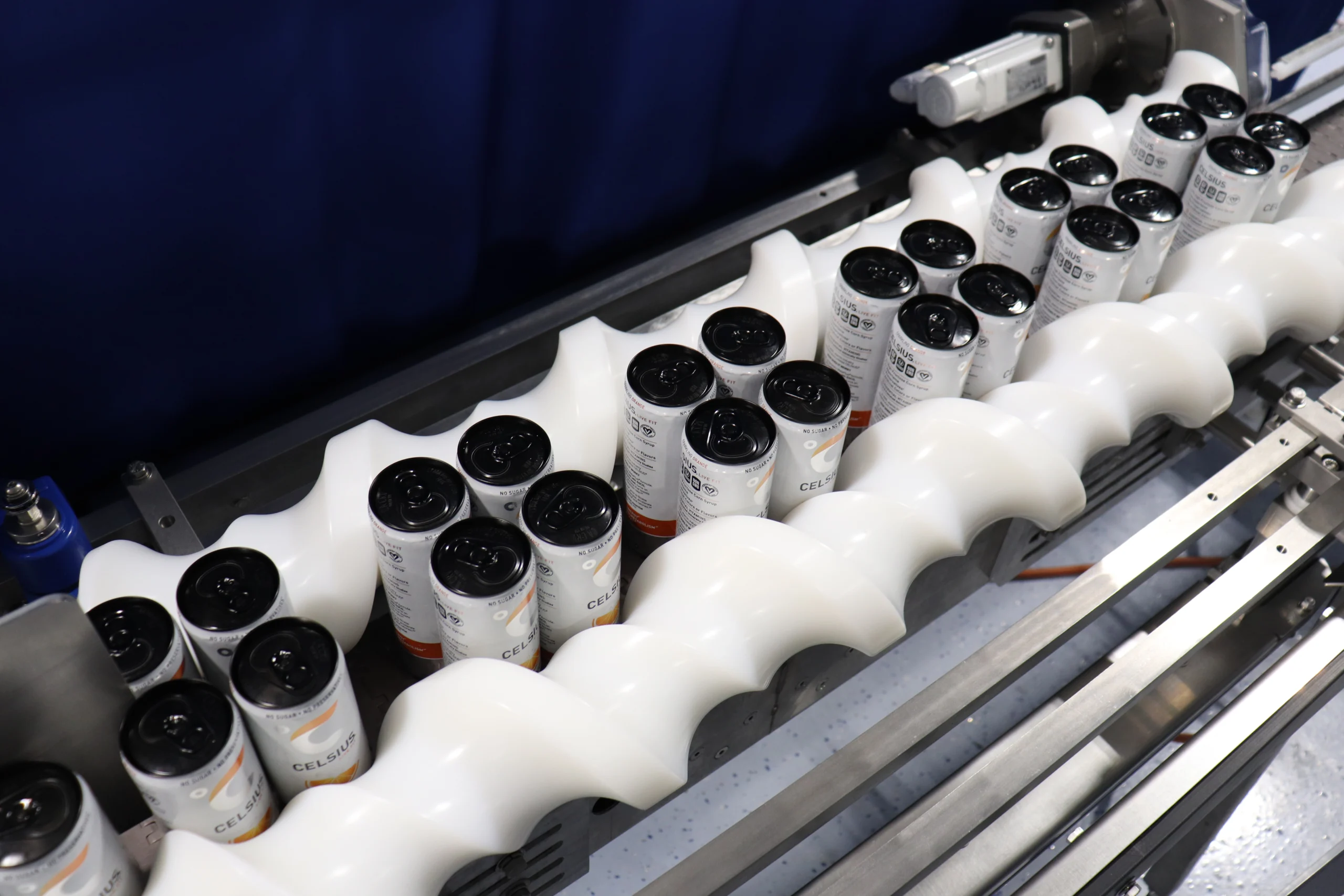
Yes, it’s possible to solve many challenges with robots, vision systems, and advanced software, but when a known, proven technology like timing screws can do the job:
- System cost is lower
- Engineering risk is reduced
- Startup and commissioning are easier
- Adapting to future container sizes is easy
- End users get a solution that’s simpler to operate and maintain
Standardization doesn’t just benefit the OEM—it creates long-term success for the customer.
“Pick Out of Screws” for Difficult or Non-Accumulating Containers
Some containers simply don’t behave well in accumulation:
- Tapered bottles
- Containers with unique features or geometries
- Products that nest, tip, or bind together
These shapes make it difficult to create a consistent robotic pick pattern from bulk flow.
Using timing screws allows OEMs to:
- Place each container in a known, repeatable location
- Create a consistent pick pattern regardless of container shape
- Avoid multiple robotic heads, complex vision systems, and elaborate end-of-arm tooling
The result is a simpler, lower-cost, and more maintainable case packing system that performs reliably even with challenging containers.
The Bottom Line: Simpler Machines, Better Results
For case packer OEMs, timing screws offer a powerful combination of:
- Precision laning and counting
- Mechanical product orientation
- Reduced reliance on robots and vision
- Lower system cost and complexity
- Greater standardization and end-user success
In a market where reliability, speed, and simplicity matter more than ever, timing screws remain a foundational technology that helps case packers perform better—by design