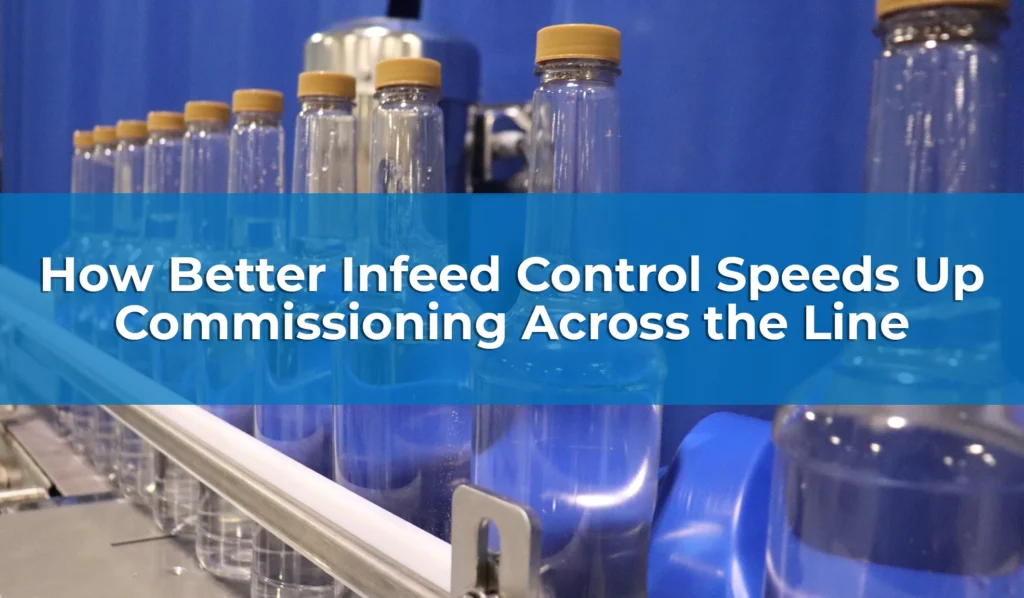
Commissioning a new packaging or automation line is often where timelines begin to slip, and the root cause is not always where teams expect. While much of the focus is placed on downstream equipment such as cartoners, case packers, or palletizers, the real constraint frequently begins earlier in the process. Infeed control, often treated as a secondary detail, plays a critical role in how smoothly a line comes together during startup.
When product enters the system inconsistently, even high-performance downstream equipment struggles to operate as intended. Irregular spacing, product surges, and poorly timed transfers create a chain reaction of adjustments and slowdowns. Strong infeed control, on the other hand, provides a stable and predictable foundation, allowing downstream systems to be tuned faster and helping the entire line reach full production with less delay.
What Is Infeed Control in Automated Systems?
Infeed control refers to how products are delivered into a machine or production line in a controlled, consistent manner. It governs the spacing, orientation, timing, and overall flow of products as they move from upstream processes into downstream equipment. The goal is to present each product in the right position, at the right time, and at the right speed for the next operation.
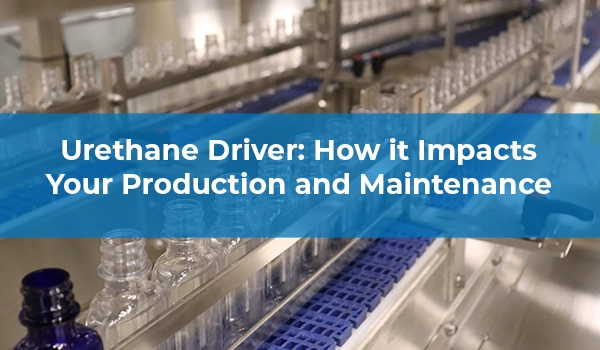
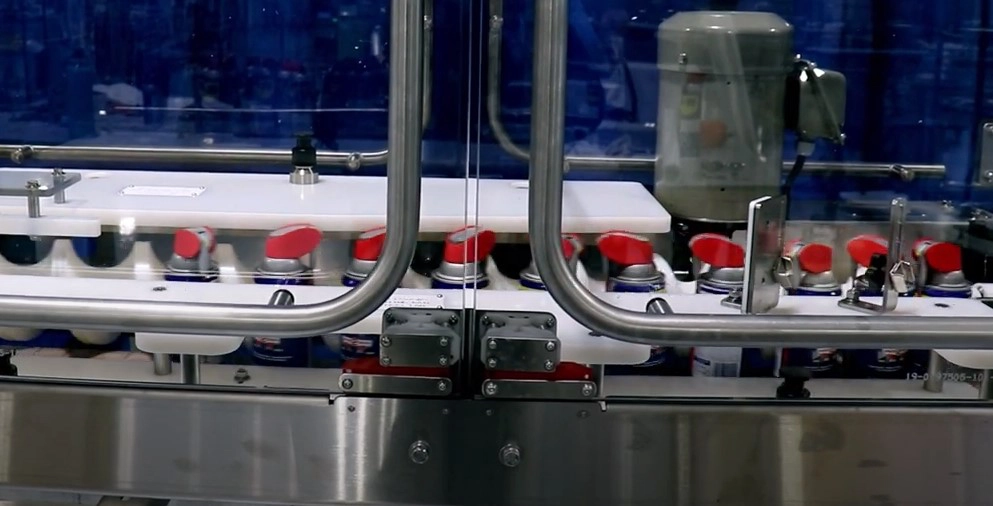
In automated systems, this control is typically achieved through a combination of conveyors, sensors, and servo-driven mechanisms. These components work together to regulate product movement, correct inconsistencies, and maintain synchronization across the line. Whether handling individual items or grouped products, effective infeed control minimizes variation and creates a steady, predictable flow. By stabilizing how products enter each stage of the process, infeed control allows downstream machines to operate as designed.
The Hidden Costs of Poor Infeed Control During Commissioning
When infeed control is inconsistent, the impact shows up immediately during commissioning. Products may arrive unevenly spaced, shift out of alignment, or surge unpredictably into downstream equipment. These issues make it difficult for machines to cycle correctly, leading to frequent stops and resets as engineers work to stabilize the process.
This lack of consistency creates a ripple effect across the entire line. Downstream systems are often adjusted repeatedly in an attempt to compensate, even though the root cause originates upstream. As a result, commissioning becomes slower and more complex, with teams spending valuable time troubleshooting symptoms rather than solving the underlying issue.
There are also practical costs that add up quickly. Extended on-site support, increased labor hours, and delayed production all impact the overall project timeline. Instead of moving efficiently from startup to full-speed operation, the line remains in a prolonged state of fine-tuning, delaying the point at which it can deliver real output.
Key Features That Improve Infeed Performance
Effective infeed control depends on a combination of mechanical design and intelligent controls working together to manage product flow. One of the most important elements is servo-driven motion, which allows for precise timing and positioning. Unlike traditional fixed-speed systems, servo control can adjust dynamically to maintain consistent spacing and synchronization, even as conditions change.
Another critical feature is the ability to adapt to product variability. Differences in size, shape, or orientation can disrupt flow if not properly managed. Systems that incorporate sensors and responsive controls can detect these variations and make real-time adjustments, helping maintain a steady and predictable infeed.
Integration across the line also plays a key role. Infeed systems that communicate seamlessly with upstream and downstream equipment allow for coordinated speed changes and smoother product transfers. This level of synchronization reduces the likelihood of bottlenecks and keeps the entire line operating as a cohesive system.
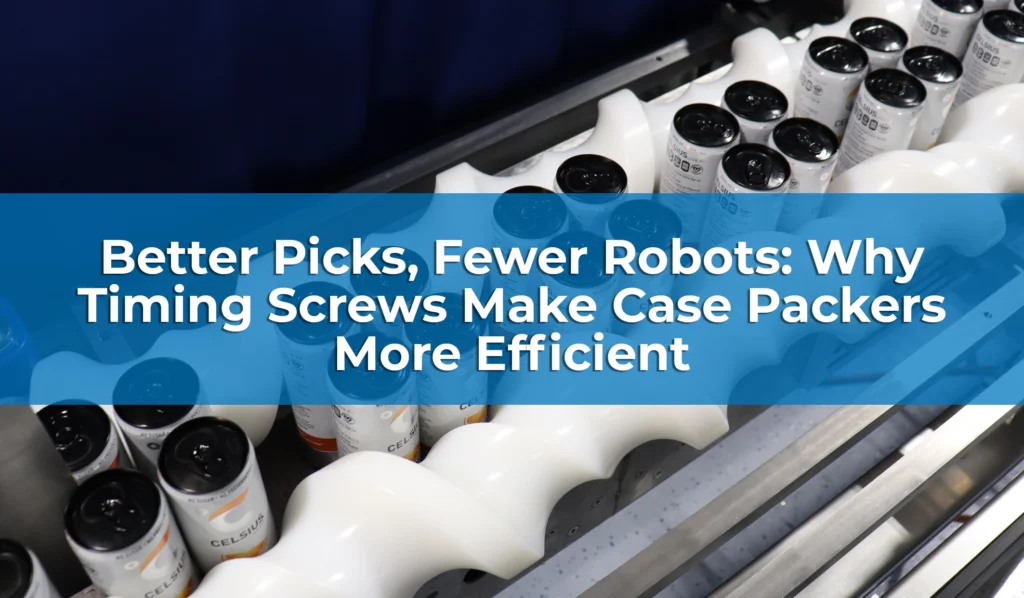
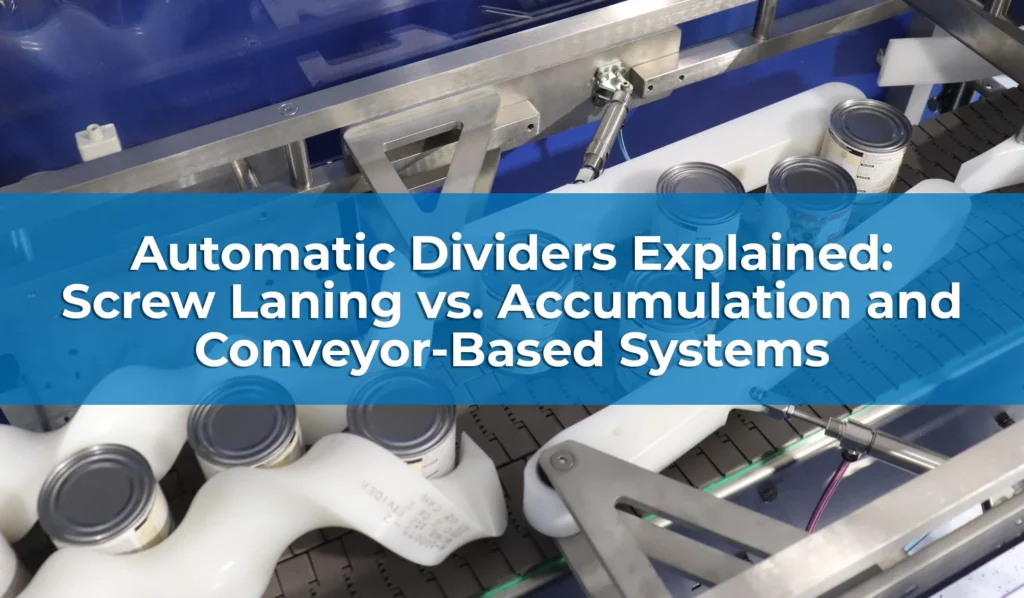
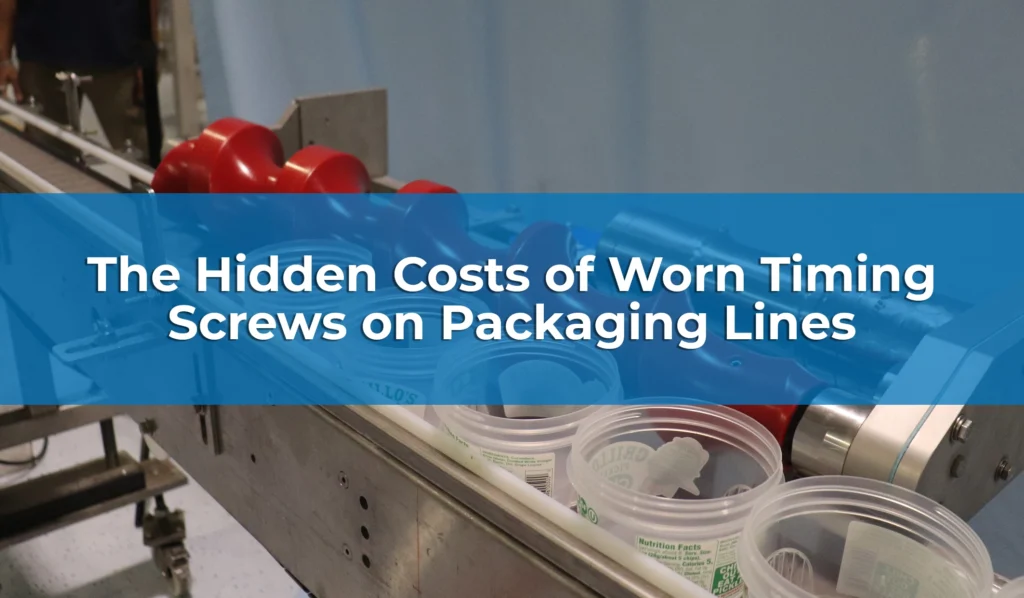
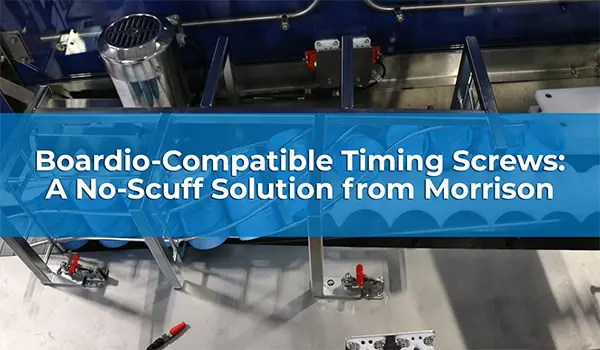
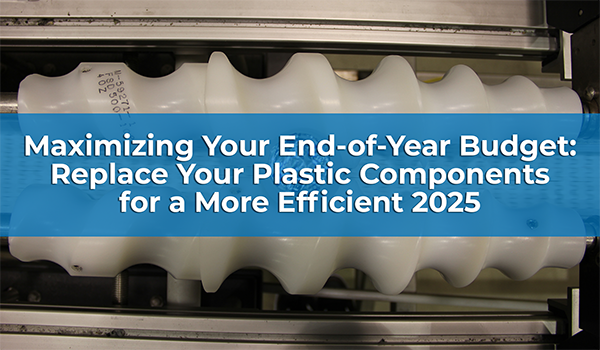
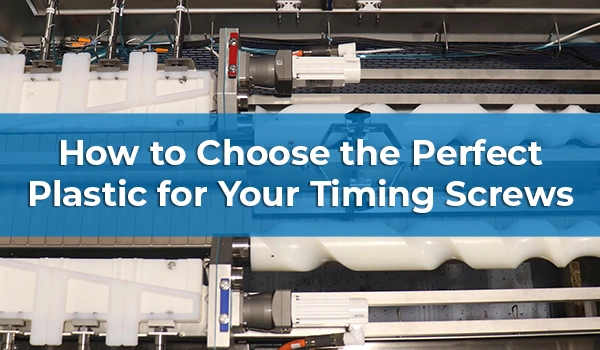
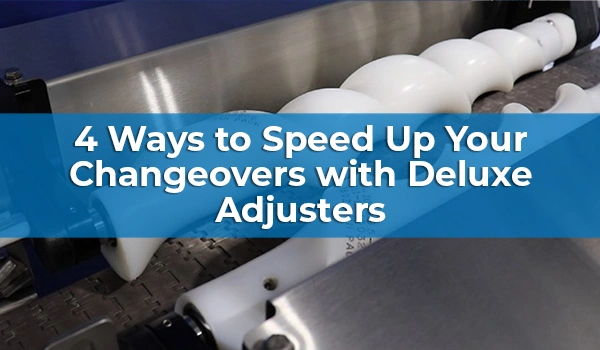
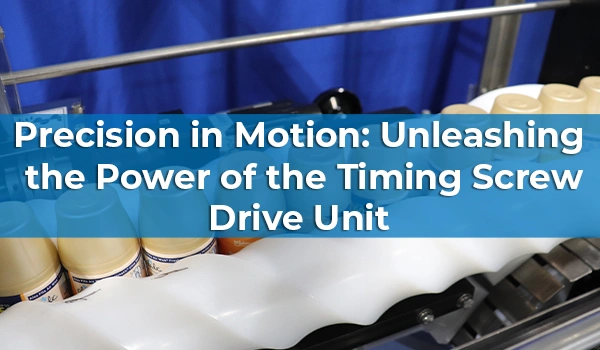
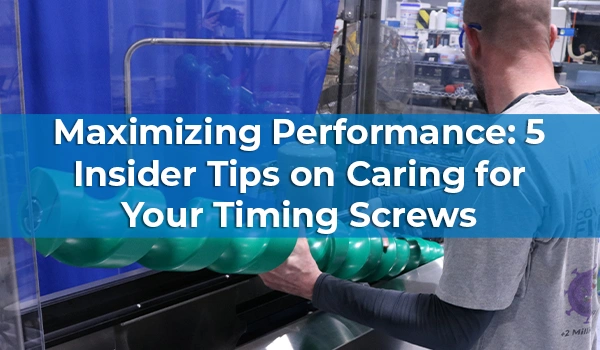
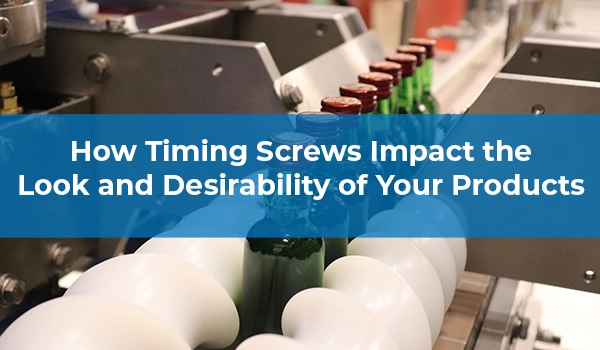
Finally, well-designed handling mechanisms and product control features contribute to overall performance. Components such as guides, timing screws, or spacing conveyors help organize product flow before it reaches critical operations. Together, these features create a controlled and reliable infeed that supports faster, more efficient commissioning.
Real-World Impact: Faster Commissioning, Faster ROI
The benefits of improved infeed control become clear as soon as commissioning begins. Lines with stable, well-managed product flow move through startup more efficiently, with fewer interruptions and less time spent troubleshooting. Instead of reacting to constant inconsistencies, teams can follow a more structured commissioning process, bringing each part of the system online with greater confidence.
This reduction in delays has a direct impact on project timelines. Shorter commissioning periods mean less time required from engineering teams and fewer extended stays on-site. It also allows production to begin sooner, which is often one of the most critical factors for end users looking to meet demand or launch new products.
Ultimately, faster startup leads to a quicker return on investment. The line reaches its intended performance levels earlier, generating output and revenue without prolonged delays. By addressing infeed control upfront, manufacturers can avoid many of the hidden costs associated with slow commissioning and realize the full value of their equipment sooner.
Best Practices for Optimizing Infeed Control Before Commissioning
Optimizing infeed control before commissioning can significantly reduce startup challenges and improve overall line performance. Pre-testing under realistic conditions helps identify spacing issues, timing inconsistencies, and handling concerns before they impact the full line.
Early collaboration between OEMs, integrators, and end users is also critical. Aligning on product specifications, throughput, and variability helps prevent gaps between system design and real-world conditions.
Designing for flexibility allows the system to handle multiple product types without extensive rework. Adjustable guides, adaptable controls, and configurable timing support consistent performance as needs change.
Finally, strong controls integration enables the infeed to communicate with upstream and downstream equipment, reducing reactive adjustments and creating a smoother startup process.
Start at the Infeed to Win the Line
Commissioning success often starts at the infeed. When product flow is consistent and controlled, downstream systems perform more reliably, troubleshooting is reduced, and the line reaches full production faster.
If commissioning delays are slowing your projects, it may be time to evaluate your infeed strategy. A more controlled, well-integrated infeed can shorten startup timelines and improve overall line performance. If you’re planning a new system or optimizing an existing one, contact our team to help you identify opportunities to strengthen infeed control and accelerate results.
Contact Information:
- Phone: +1(708) 756-6660
- Email: info@morrison-chs.com